
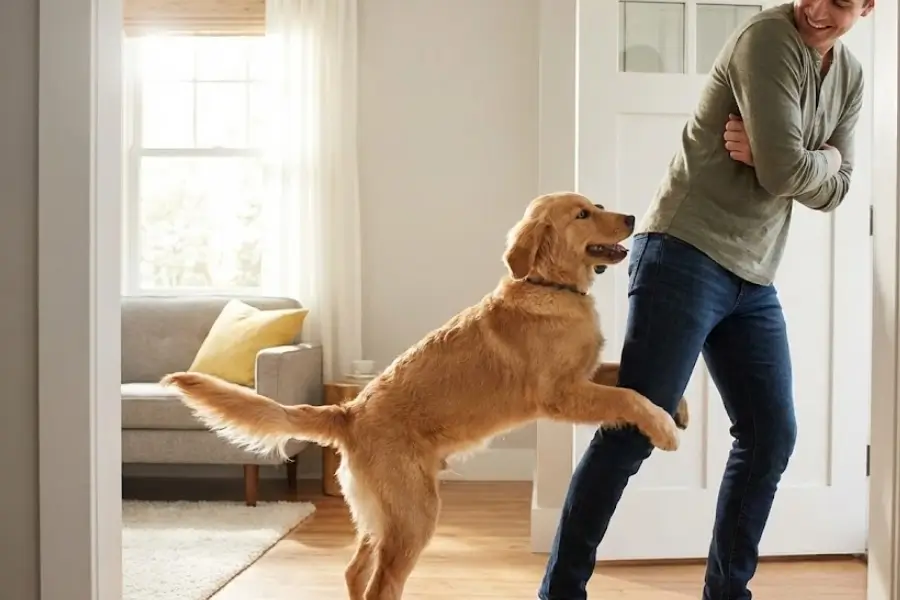
The doorbell goes and the dog becomes a projectile. Charming at ten pounds, considerably less so at seventy, and genuinely dangerous around an elderly relative or a small child.
This is one of the most common complaints in dog training and one of the most fixable. It takes a few weeks of consistency and one particular change in what you do when it happens.
Why they do it
- It is how dogs greet. Face to face, with muzzle licking between dogs. Our faces are five feet up, so they come up to meet them.
- Sheer excitement. A new person arriving is an enormous event for a sociable dog, and jumping is the energy going somewhere.
- It works. This is the big one. Pushing the dog down, shouting, holding their paws, all of it is attention, and attention is the thing they were after. Every correction has been a reward.
The dog is not being dominant and is not being bad. It is doing the thing that has reliably worked.
What not to do
- Kneeing the dog in the chest. Outdated, and it injures dogs. It also teaches them to be wary of people arriving, which creates a worse problem than the one you started with.
- Standing on their back feet. Painful, and it damages trust for nothing.
- Squeezing their front paws. Some dogs read it as a game, some as a threat, and neither tells the dog what you actually want.
- Shouting no or down. Loud attention is still attention, and an excited dog often reads raised voices as joining in.
The rule everything rests on
Attention only ever happens when all four feet are on the floor. No eye contact, no talking, no touching while the dog is up.
You become completely uninteresting until the feet land, and interesting again the moment they do. That is the whole lesson, and it is why the corrections above fail: every one of them keeps you interesting while the dog is jumping.
Phase one: stop the practice
Every successful jump strengthens the habit, so prevent it while the training takes hold.
- Put the lead on before you open the door. Stand on it with enough slack to sit or stand comfortably but not enough to get up.
- If a lead is not enough, put the dog behind a baby gate or in a crate with something stuffed and tasty, and bring them out on a lead once the visitor has settled.
- Scatter a handful of treats on the floor away from the door as the guest comes in. Hoovering the carpet and jumping cannot happen at once.
Phase two: teach sitting instead
A dog cannot sit and jump simultaneously, which is why sitting is the behaviour to build.
- Practise with no visitors. Walk toward the dog. If they jump, turn your back, fold your arms and look at the ceiling. Become furniture.
- Wait. They may bark, jump at your back, or get visibly frustrated. Keep waiting. Eventually they will sit, mostly out of confusion.
- The instant they sit, turn round, say good sit in a calm voice, and treat. Stroke them under the chin or on the chest. Reaching over the head invites another jump.
- Do it dozens of times a day until person approaching means sit before the dog has thought about it.
Phase three: staged visitors
Recruit a friend to arrive on purpose.
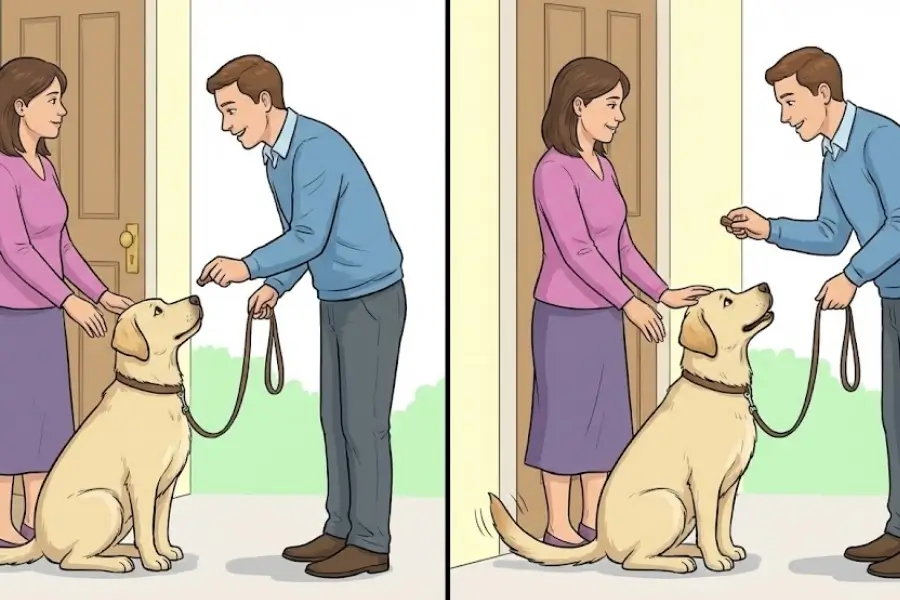
- Brief them first. Ignore the dog completely if he jumps. Turn your back, no eye contact, no talking. When he sits, you can give him this treat calmly.
- Dog on the lead, friend knocks, you open the door.
- If the dog jumps, the guest turns away. When he sits, mark it and let the guest offer the treat and a quiet stroke.
- If he leaps up again the second attention arrives, the attention goes away again immediately. The reward only exists when he is sitting.
Phase four: real life
Fade the lead and the treats gradually. The greeting itself becomes the reward.
The thing that undoes this work is the guest who says they do not mind. You will meet them, usually while a large dog is on their shoulders. The answer is a polite one: I mind, we are training him, please turn your back until he sits. One person allowing it costs you weeks, so being your dog’s advocate matters more than being a relaxed host.
How long
A few weeks for a noticeable change, longer for a dog who has been rehearsing this for years. There will be days it falls apart, usually when someone exciting arrives.
The shift that makes it work is asking what you want the dog to do rather than how to stop them. Take the reward off jumping, put it heavily on sitting, and the dog works out the rest faster than you expect.












0 Comments