
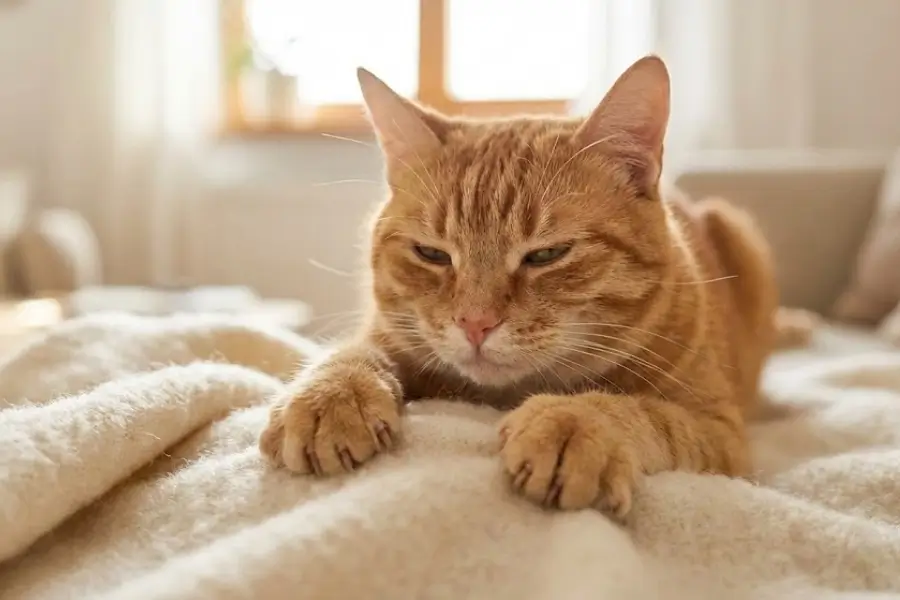
Every cat owner knows the motion. Paws pushing in and out against a blanket or a lap, left then right, usually with a purr underneath it. Making biscuits.
It looks like contentment and it is, but there is more than one thing going on, and the reasons are more interesting than the name suggests.
It starts with nursing
The best supported explanation is that kneading is left over from kittenhood. Nursing kittens push against their mother’s belly to encourage the milk to flow, and that motion is bound up with warmth, safety and being fed.
An adult cat kneading a soft surface is reaching back into that association. The texture triggers it, and what follows is a cat that feels as safe as it is possible for a cat to feel. It is one of the more reliable signs you will get that an animal is genuinely relaxed rather than merely still.
They are also scent-marking
Cats have scent glands between the pads of their paws. Kneading presses those glands against whatever they are standing on and leaves their smell in it.
That is why the kneading happens on the same cushion every time. The cat is not only settling, it is making the spot smell correct, which is part of how a cat builds a sense of safety in a room.
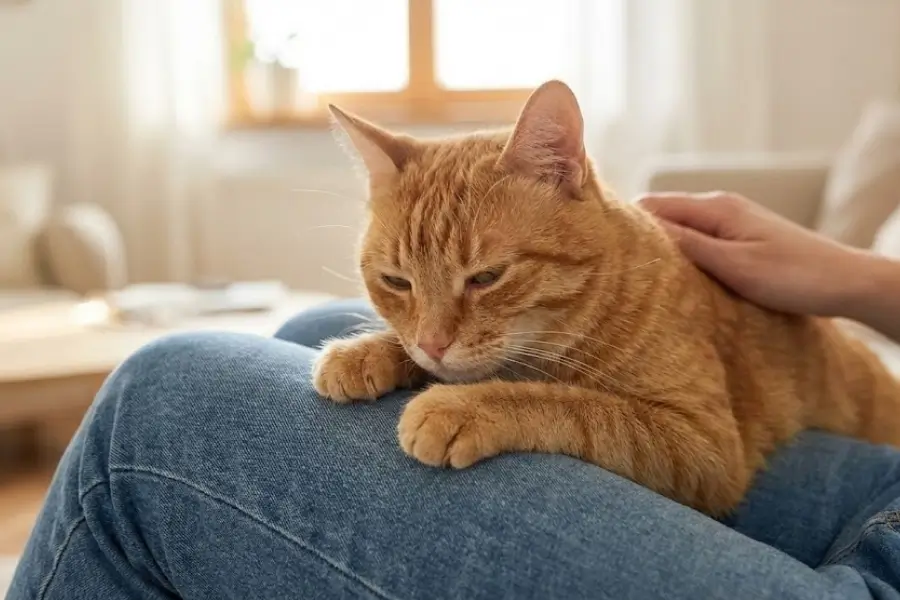
When it is you being kneaded
A cat that kneads your lap is doing both things at once. Behaving as it did with its mother, and marking you with its scent while it does.
It is, as compliments go, a substantial one. The cat is saying it feels safe with you and counting you as part of its household. The claws are an unfortunate feature of the compliment, and trimmed nails solve it without discouraging the behaviour.
The other explanations
- Making a bed. Wild ancestors trampled grass and leaves flat to build somewhere concealed to sleep or give birth, and the instinct plausibly survives.
- Stretching. The motion extends the paws and toes, and much of it happens straight after a nap, which fits.
- Being in season. Unspayed females often knead considerably more when in heat, usually alongside yowling and a sudden increase in affection.
Should you stop it
There is no reason to. It is normal, it signals a happy cat, and interrupting it teaches a cat that being relaxed near you ends badly.
If the claws are the problem, keep them trimmed or put a folded blanket on your lap before they settle. The one thing worth noticing is a sudden change: a cat that has always kneaded and stops, or one that starts kneading obsessively, is worth mentioning at the next vet visit.












0 Comments