
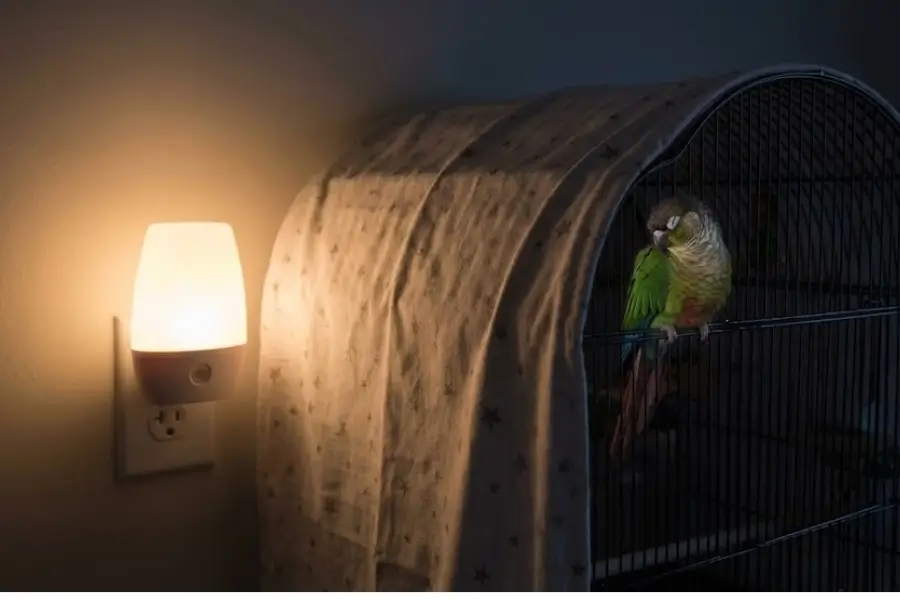
Ten to twelve hours of dark, quiet, unbroken sleep. Every night. That is a heavier requirement than most owners realise they signed up for, and it is the single most common thing missing from an otherwise well kept bird.
The reason sits in where these birds come from, and once you see it the rule stops feeling arbitrary.
Why twelve hours
Nearly all the popular pet species originate near the equator, where day and night run close to equal all year round. Roughly twelve hours of light, roughly twelve of dark, with no seasonal drift.
Their internal clocks are built around that, and they have no mechanism for adapting to a living room where the lights stay on until eleven and the television is still going. What we think of as a normal evening reads to a bird as an unnaturally long day, every day.
What short sleep does
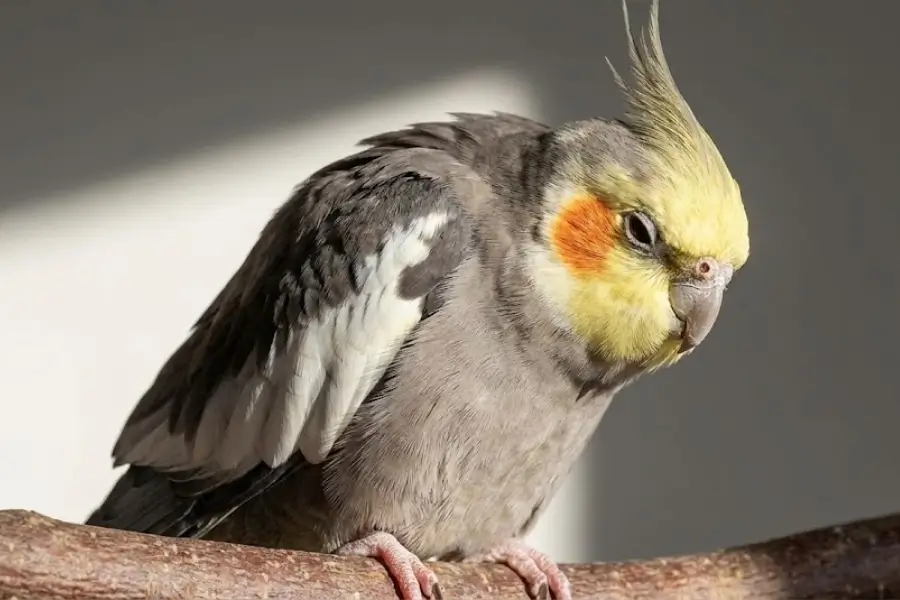
- Behaviour goes first, and it is usually what the owner notices. A bird that was affectionate becomes irritable and nippy, with screaming fits that seem to come from nowhere. Sustained, it contributes to feather plucking.
- Immunity drops. A tired bird picks up infections a rested one would have shrugged off.
- Hormones misfire. A long day is the signal for breeding season, so you get territorial aggression and, in females, chronic egg-laying, which is genuinely dangerous.
- The stress is constant and low level, and it shortens their life.
The awkward part is that none of this looks like tiredness. It looks like a bird with a personality problem, which is why it goes unaddressed for years.
Building the routine
- Fix the times and keep them. Same bedtime, same wake-up, including weekends. Birds settle into routine quickly and they notice when it moves.
- Make it genuinely dark. Not dim. A good opaque cover is the simplest way, and it is the step people most often do halfway.
- Make it quiet. If the cage lives in the busiest room in the house, that room is not where the bird can sleep.
- Consider a separate sleep cage. In a loud household this solves the problem outright. It needs nothing more than a perch, food and water, in a quiet dark room.
The payoff
A rested bird is a different animal: playful, tolerant of handling, interested in what you are doing rather than screaming about it.
It is also one of the few pieces of bird care that costs nothing. A cover and a consistent bedtime will do more for most pet birds than any toy you could buy them.












0 Comments