
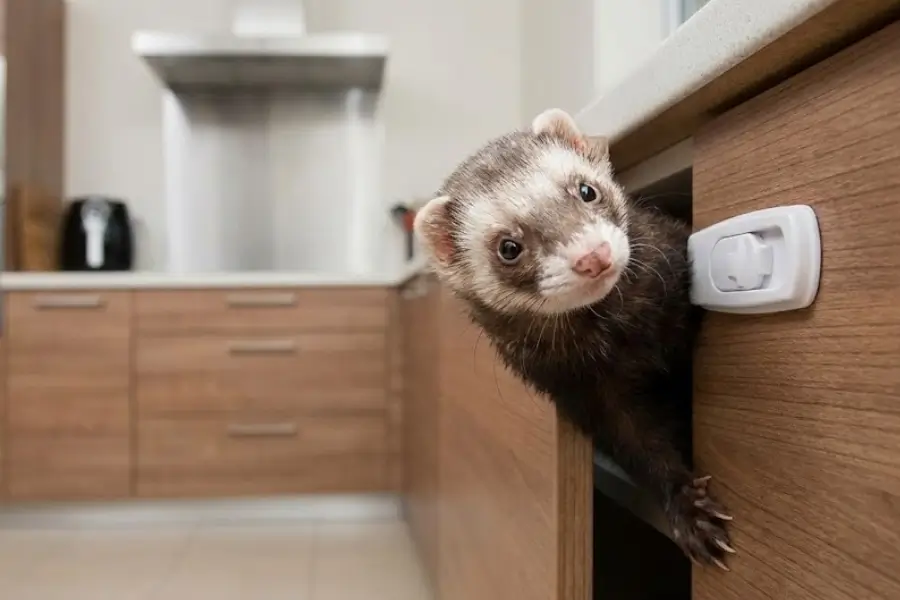
A ferret is a burrowing animal with the flexibility of a draught excluder and the judgement of a toddler. Proofing a house for one is less like cat-proofing and more like sealing a boat.
The rule that governs all of it: if the head fits through, the ferret fits through. Work from that and most of the rest follows.
How a ferret sees your house
They are built to go into things. Tight gaps, dark corners and tunnels are not hazards to be avoided, they are the entire appeal, and a ferret will find the one you did not know existed.
They also investigate with their mouths, and they have a specific appetite for rubber, soft plastic and foam. None of those pass through a ferret. Intestinal blockage is the commonest emergency in the species and it is close to entirely preventable, which is the real reason to do this properly.
Start on the floor
Get down on your hands and knees and look along the skirting boards. You will find gaps you have walked past for years.
- Seal anything over about an inch, in walls, floors and behind the skirting. Use wood or wire mesh. Caulk does not work, because a ferret will simply chew it out.
- Check window screens for tears and fit sweeps to exterior doors.
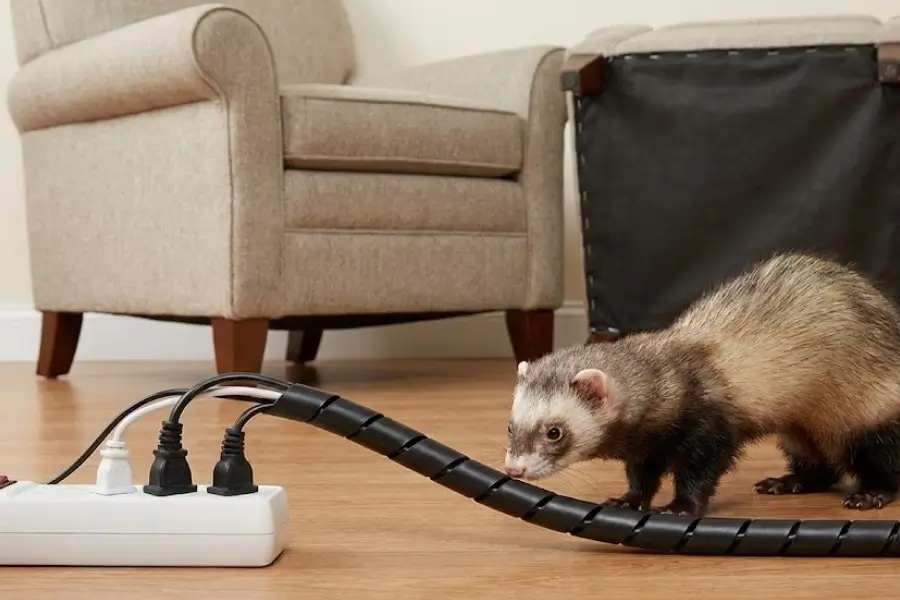
- Run every reachable cable through split loom tubing.
- Deal with the recliners. The mechanism under a reclining chair or a sofa bed is the single most common way ferrets are killed indoors. Board or fabric off the underside so there is no way in, and get into the habit of knowing where the ferret is before anything moves.
Kitchen and laundry
- Block the gaps behind the fridge, the cooker and the washing machine with planks or mesh. Warm and dark behind an appliance is exactly what they are looking for.
- Check inside the washing machine, the dryer and the dishwasher before you shut the door, every single time. A pile of warm laundry is a ferret bed.
- Child locks on the low cupboards, particularly cleaning products and the bin.
- Covers on every sink and floor drain.
Bathroom
- Toilet lid down, always. A ferret that falls in cannot get back out.
- Child locks on the vanity. Medication and toothpaste well up out of reach.
- Seal the gaps around the pipes under the sink.
Living room
- Move the houseplants. Many are toxic, and a ferret will dig in the pot regardless.
- Keys, jewellery and wallets off low surfaces. They will not be destroyed, they will be hidden, and you will find the stash eventually.
- Watch the small rubber and foam things. Remote control buttons, earbud tips and shoe insoles are all classic swallowed items.
One safe room beats a safe house
You will not make a whole home genuinely ferret-proof, and pretending otherwise is how accidents happen. Pick one room, strip the hazards out of it properly, and let that be where free time happens under supervision.
Treat the proofing as ongoing rather than finished. Ferrets get bolder and more inventive with age, and the gap that was ignored for a year becomes interesting the week you stop checking.












0 Comments