
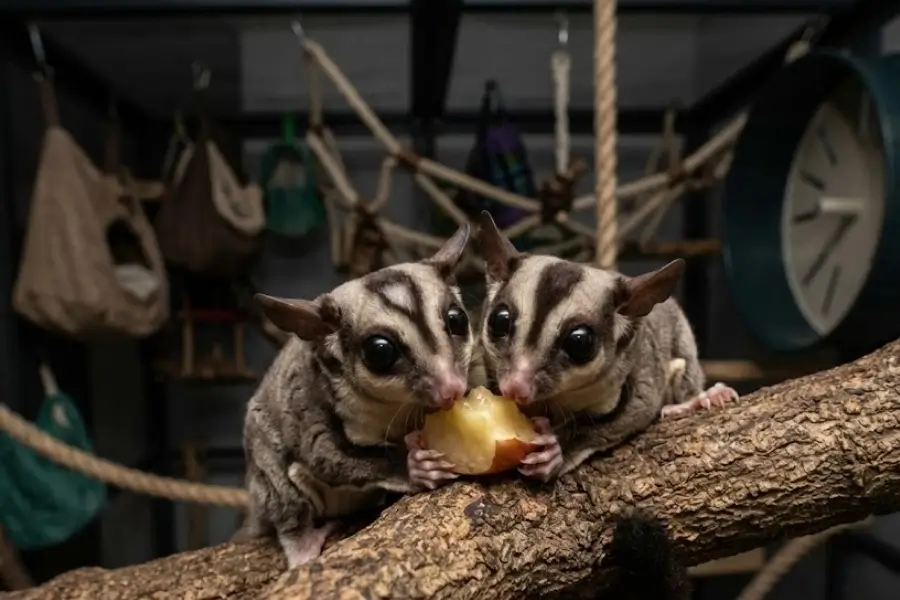
Sugar gliders are the kind of animal that sells itself in a single photograph. Enormous eyes, soft fur, and a membrane that lets them glide across a room.
They are also a ten to fifteen year commitment with a diet you prepare daily and a social requirement you cannot meet yourself. Petaurus breviceps is a nocturnal marsupial from Australia, Indonesia and New Guinea, and almost everything difficult about keeping one follows from those two facts.
You cannot keep just one
In the wild they live in colonies of ten to fifteen. The need for company is not a preference that a friendly owner can substitute for. It is how the animal is built.
A glider kept alone becomes genuinely depressed, and it shows: constant barking, self-mutilation, and in bad cases it kills them. Vets and experienced keepers say the same thing without much disagreement, which is that two is the minimum. However much time you spend with them, you are not awake at the right hours and you do not groom them.
The diet is the daily work
Wild gliders eat sap, nectar, pollen and insects. There is no bag of food that reproduces that, and getting it wrong is the leading cause of illness in captive gliders: obesity, malnutrition, dental disease and metabolic bone disease.
- A nectar replacement made to an established recipe, such as Leadbeater’s mix or a BML diet.
- Fresh fruit and vegetables, prepared daily.
- Protein from gut-loaded insects such as crickets or mealworms, or cooked egg.
Two common shortcuts cause real damage. Fruit alone leads to calcium deficiency. Cat food and reptile food are not nutritionally appropriate, whatever the protein figure on the label suggests.
They are awake when you are not
Peak activity runs from dusk to dawn. They will be on the wheel, climbing and calling while you are trying to sleep, and they are not quiet. The bark carries like a small dog’s, and a frightened glider makes a harsh hissing sound called crabbing.
During the day they need dark and genuine quiet. Waking a glider for playtime is stressful for it and is a reliable way to get bitten. If you sleep lightly, or your evenings are not free, this is the fact that should decide it.
What the cage has to be
The minimum for a pair is around 24 inches deep, 24 wide and 36 high, and bigger is always better. Height matters more than floor area, because climbing and gliding is what the animal is for.
- Several fleece sleeping pouches hung near the top, so they can sleep dark and secure.
- Ropes, ladders and safe branches to climb.
- A solid-surfaced wheel. Wire rungs catch tails and feet.
- Foraging toys, so food takes effort and the evening has something in it.
Bonding takes longer than you expect
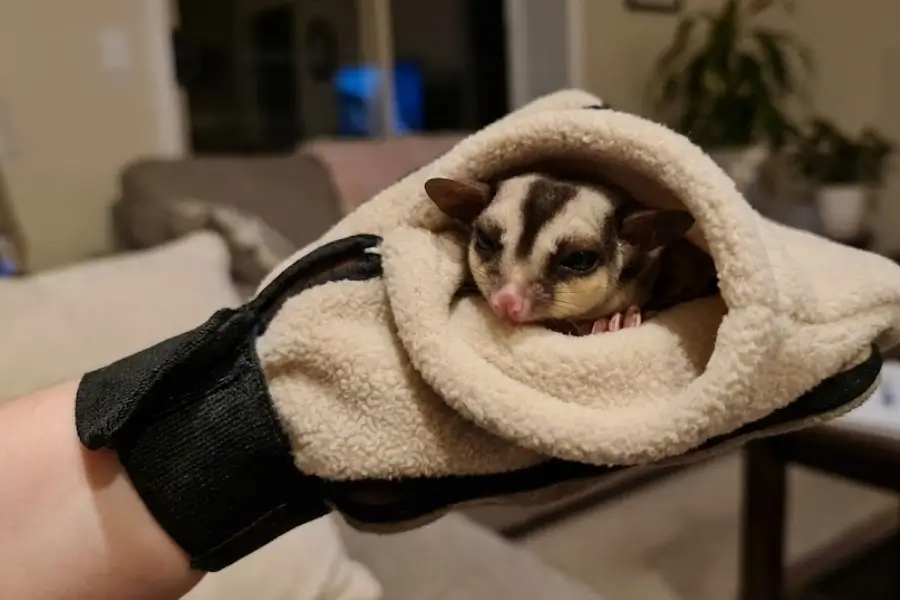
They are not tame when they arrive. Trust is built slowly, usually by pouch bonding, where the sleeping glider is carried against your body during the day and learns your scent and movement as background rather than threat.
Early on they will crab at you and they may bite. Weeks is normal, months is common. On the other side of it they are genuinely affectionate and very entertaining, but nothing about that stretch can be hurried.
The honest summary
Sugar gliders suit someone who is up in the evening, willing to prepare food every day, and able to take on a pair for well over a decade.
They are not a starter pet, and they are not a pet for a child, however much a child wants one. If the list above reads as a fair description of your life, they are remarkable animals. If any line of it gave you pause, that pause is the useful information.












0 Comments