
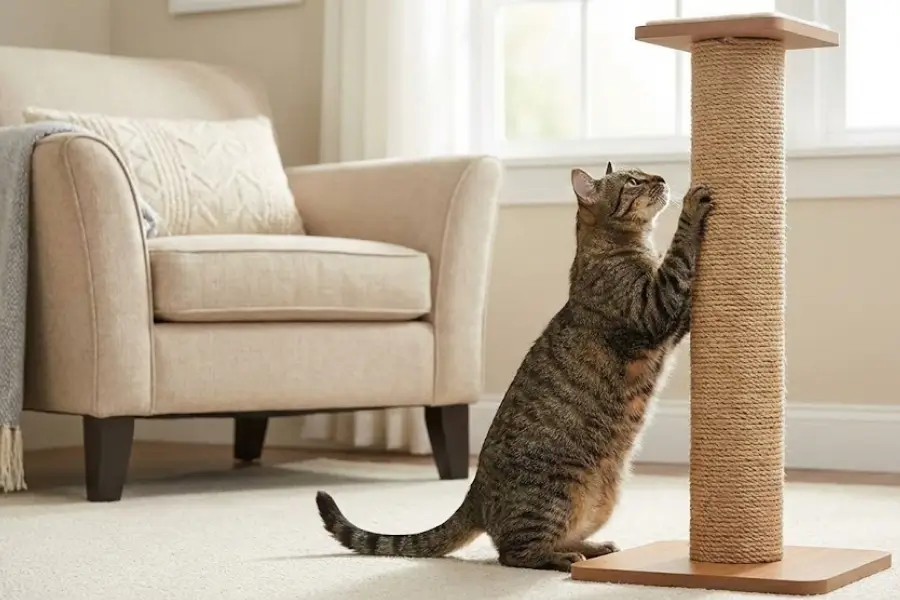
Cats do not scratch furniture out of spite or because they are untrained. They scratch because they have to, and the sofa is simply the best thing available.
Which means the problem is nearly always the post, not the cat.
Why they do it
- Marking. Scratching leaves a visible mark and a scent from glands in the paws. It is a message board as much as a habit.
- Claw maintenance, shedding the dead outer sheath to keep the claw underneath sharp.
- Stretching. A full scratch works the back and shoulders, which is why so much of it happens immediately after a nap.
- Releasing tension, which is why it often spikes when something has changed in the house.
None of that can be trained away, and trying is what leads people to consider declawing. The whole job is redirection.
What makes a post they will use
Material
Sisal rope or sisal fabric is the standard, because the texture gives the resistance a cat is looking for and shreds satisfyingly.
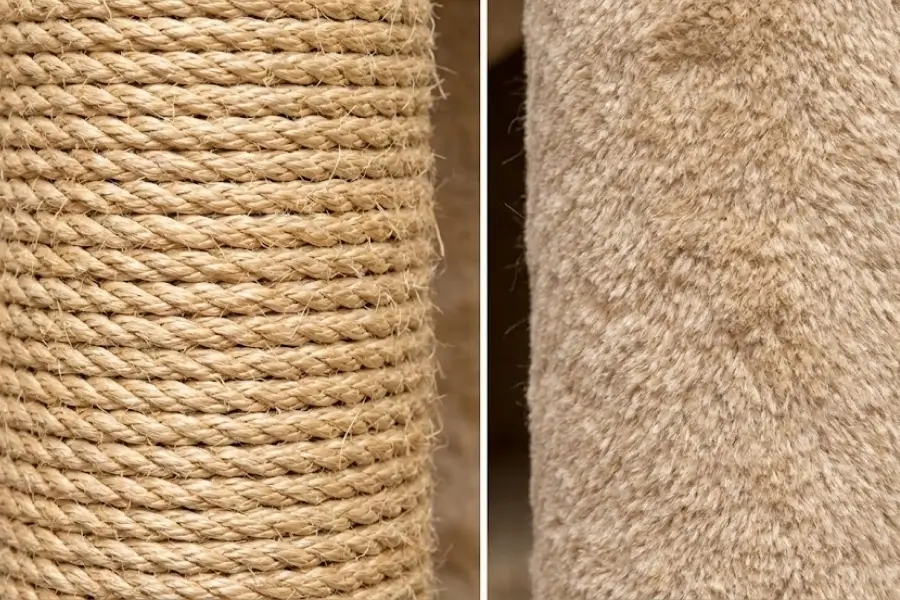
- Avoid carpeted posts. The texture is too close to your floor and your stairs, and you are effectively teaching that carpet is for scratching.
- Corrugated cardboard pads are cheap, effective, and horizontal, which suits the cats who scratch floors and rugs rather than uprights.
Height
Tall enough for a full stretch on the hind legs, which means at least 30 inches for an average adult cat. The stretch is half the point, and a short post delivers none of it.
Stability
This is the one most commonly got wrong. The post must not move at all under a cat’s full weight, which needs a wide heavy base.
A post that wobbles once will not be used again. Cats do not give equipment a second chance, and this single factor explains most abandoned scratching posts.
Where to put it
- Next to where they sleep, since scratching straight after waking is close to universal.
- Directly beside the piece of furniture they are currently using. Not across the room, not somewhere tidier. The location is part of the message they are leaving, so the alternative has to be in the same place.
- Once the habit has moved across, you can shift the post a few inches at a time if you must.
Getting them onto it
- Rub catnip into the sisal or sprinkle it at the base.
- Play with a wand toy around and up the post so their claws land on it during the game.
- Praise and treat any use of it, immediately.
- Make the sofa duller at the same time. Double-sided tape or foil on the target spot for a couple of weeks while the new habit forms.
Never tell them off for scratching furniture. All it teaches is not to do it while you are watching, and it adds the stress that often caused it.
One more thing
Have more than one post, in more than one texture and orientation. Cats have strong individual preferences and vertical sisal is simply the most common answer, not the universal one.
A cat that suddenly starts scratching in a new place, after years of using its post, is usually reacting to something. A new pet, a house move, or a cat visiting the garden. Worth looking for the cause rather than buying another post.












0 Comments