
Cats conceal illness thoroughly. It is a survival instinct and it does not care that it is now inconvenient, which is why so many conditions are found late.
A few minutes of checking at home, done regularly, is the most useful thing an owner can do. Not because you will diagnose anything, but because you will notice the change.
Coat and skin
A healthy cat has a smooth glossy coat and skin that moves easily.
- Run both hands over the whole body, feeling for lumps, scabs and rough patches. Do it while they are being stroked and most cats will not notice you are working.
- Part the fur, particularly at the base of the tail and around the neck, and look for fleas or flea dirt.
- Be alert to over-grooming, bald patches, redness or flaking. A cat grooming one spot bare is usually in pain there or is stressed.
Eyes and ears
- Eyes should be bright, clear and equal. Redness, cloudiness, watering or discharge all warrant a call.
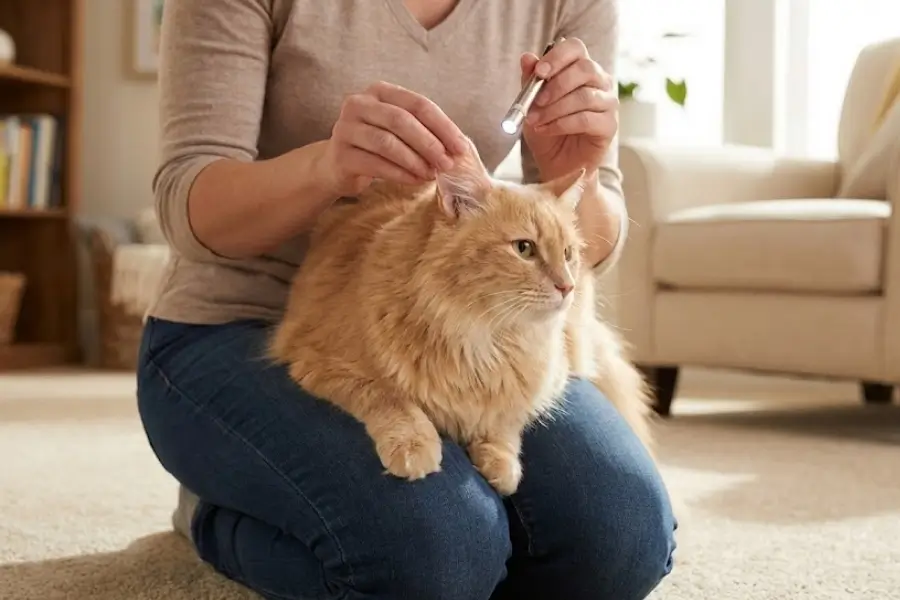
- Fold the ear flap back gently and look in. Clean, pale and no smell is right.
- Dark waxy debris that looks like coffee grounds suggests ear mites. Redness, swelling or a sour smell suggests infection. Both need treating rather than cleaning out at home.
Teeth and gums
Dental disease is extremely common and genuinely painful, and cats carry on eating through a great deal of it.
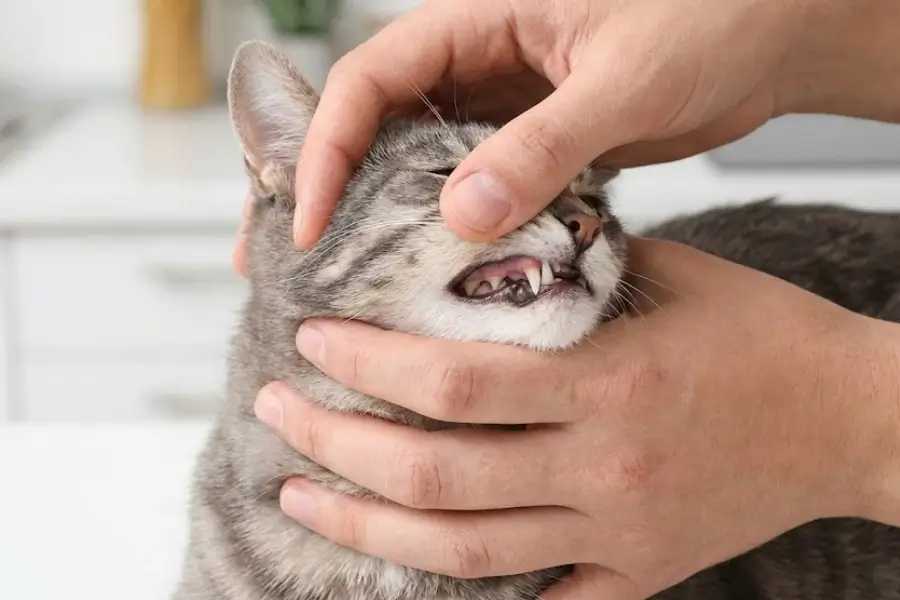
- Lift the lip gently and look along the gum line.
- Gums should be pink and firm, not red, swollen or bleeding.
- Yellow or brown tartar, loose teeth and bad breath are all signs. Strong breath in a cat is not normal, whatever anyone tells you.
Weight and body condition
- Feel along the ribs. You should find them easily under a thin layer, without them being visible or sharp.
- Looking down from above there should be a visible waist behind the ribs.
- Ribs you cannot find means overweight. Any unexplained change in either direction is worth a vet visit, because weight loss in particular is an early sign of several serious conditions.
Weighing monthly on kitchen scales catches this far earlier than looking does. A cat losing half a kilo has lost a tenth of itself, and you will not see that in the mirror.
The litter tray
Often the earliest warning you get, and the easiest to overlook in a multi-cat house.
- Note how often, how much, and what it looks like.
- Straining, going more or less often than usual, blood, or going outside the tray can all mean a urinary problem.
- Diarrhoea or constipation point at the digestive side.
One thing to treat as an emergency: a male cat straining to urinate and producing little or nothing. A urinary blockage can kill within a day and it needs a vet immediately, not in the morning.
How to use all this
Do it monthly, make it part of a stroking session, and finish with something good. You are building a baseline for your own cat rather than measuring against a chart.
None of this replaces a proper check-up, and cats over about eleven benefit from seeing a vet twice a year. What it does is make you the person who noticed early, which is usually what decides how these things go.












0 Comments