
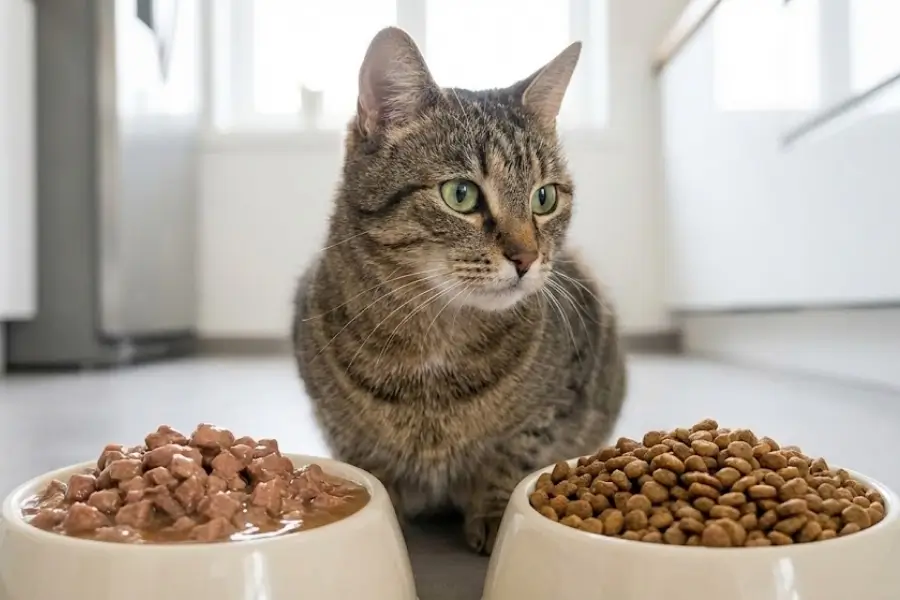
The wet or dry question does not have one answer, and most of the confident answers online are selling something.
What follows is what each format genuinely does well, where the common claims are weaker than they sound, and how most vets actually suggest handling it.
The case for wet food
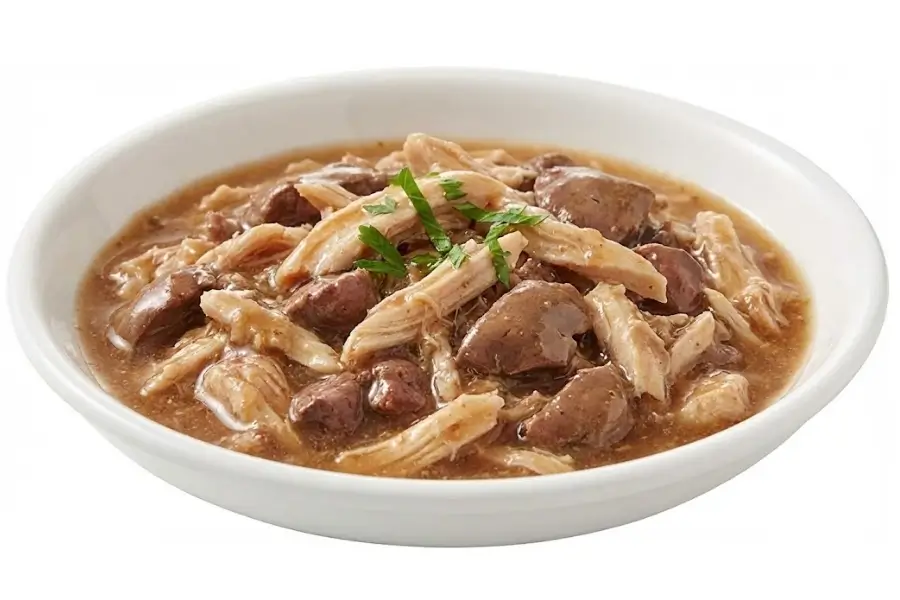
Wet food is roughly 75 to 85 percent water, and that single fact carries most of its advantages.
Cats evolved to get nearly all their water from prey and have a famously weak thirst drive. A cat on dry food alone frequently runs slightly dehydrated without ever looking thirsty.
- Hydration, which matters for urinary crystals and stones and for kidneys. This is the strongest argument in the whole debate.
- Palatability. Warm, smelly and soft suits most cats, and it is often the only thing a picky or unwell cat will eat.
- Generally lower in carbohydrate and higher in protein, which suits an obligate carnivore.
- Useful for weight control, because the water adds bulk without calories and a cat feels fuller on less.
Against it: more expensive, has to go in the fridge once opened, spoils if left out, and it does nothing for teeth.
The case for dry food
Dry food is around 10 percent water, and its advantages are mostly practical.
- Convenience. It can sit out, it works in automatic feeders, and it survives a day at room temperature.
- Cost, which is a genuine consideration in a multi-cat house.
- Long shelf life and easy storage.
Against it: the low moisture, and generally more carbohydrate and more plant protein than a cat needs.
The dental claim, which needs qualifying
The idea that dry food cleans teeth is the most overstated thing in this argument. Standard kibble shatters on contact and never reaches the gum line, which is where dental disease actually starts.
Specific dental diets, with larger pieces designed to be bitten through rather than crushed, do have evidence behind them. Ordinary kibble does not. If teeth are your reason for feeding dry, brushing does far more, and a dental diet does more than a regular one.
What most cats should eat
- A combination is the usual recommendation. Wet for the water and the protein, dry for convenience and cost, which gets most of both.
- If your cat has had urinary problems, has kidney disease, or is overweight, your vet will likely want the diet mostly or entirely wet. In those cases the moisture is doing real clinical work.
- Quality matters more than format. Look for a named animal protein first on the list and a complete and balanced statement for your cat’s life stage. A good dry food beats a poor wet one.
If you are switching
Do it over a week or two, mixing gradually. Cats can be extremely resistant to new textures, and a cat raised on dry may not initially recognise wet food as food at all.
One serious warning: never let a cat, particularly an overweight one, go without eating for more than a day or two while you hold out for them to accept new food. Cats develop hepatic lipidosis, a liver condition, remarkably quickly when they stop eating. If a food change means your cat is not eating, go back to the old food and talk to your vet.












0 Comments