
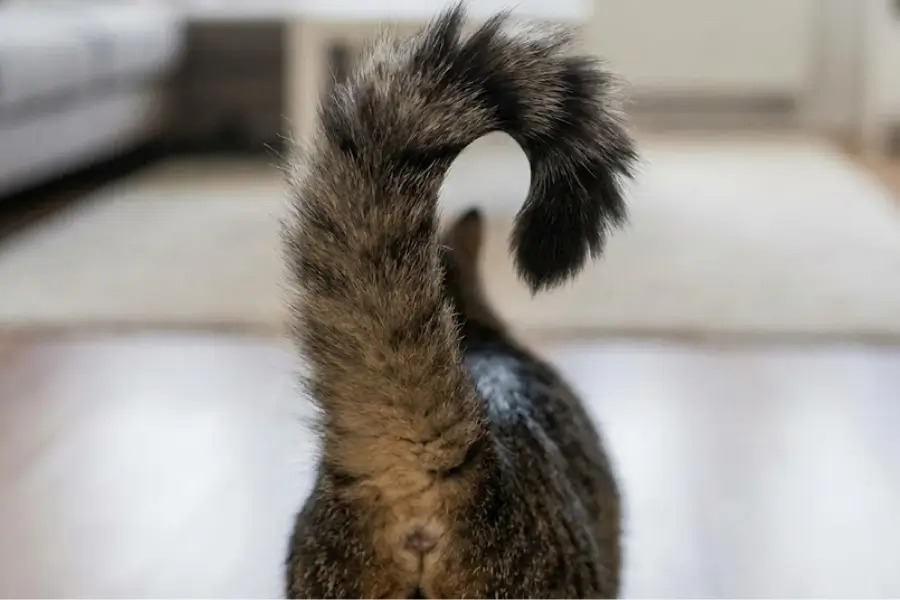
A dog’s wagging tail broadly means one thing. A cat’s tail is a much more detailed instrument, and the same movement can mean delight or the last warning before a bite.
Learning to read it is the quickest way to stop misunderstanding your own cat.
The friendly ones
- Straight up with a quiver at the tip. A cat approaching with a vibrating upright tail is genuinely pleased to see you. It is the warmest greeting a cat has, usually reserved for their person and often for food.
- The question mark. Held high with a curve at the tip. Playful, curious and open to interaction. This is the moment to get a toy out.
- Wrapped around your leg or another animal. A deliberate social gesture, the cat equivalent of a hand on the shoulder.
- The slow blink, which usually comes with a relaxed tail. Closing and opening the eyes slowly while looking at you is about as clear a statement of trust as a cat makes. It works both ways, and most cats will answer it.
The warnings
- Fast lashing or thumping against the floor. Irritation or conflict, and it escalates. If this starts while you are stroking them, stop immediately. Almost every so-called unprovoked bite was preceded by this.
- Held low with the tip twitching. In a hunting context it is concentration. In a social one it means the cat is weighing something up and is uneasy about it. Give them room to decide.
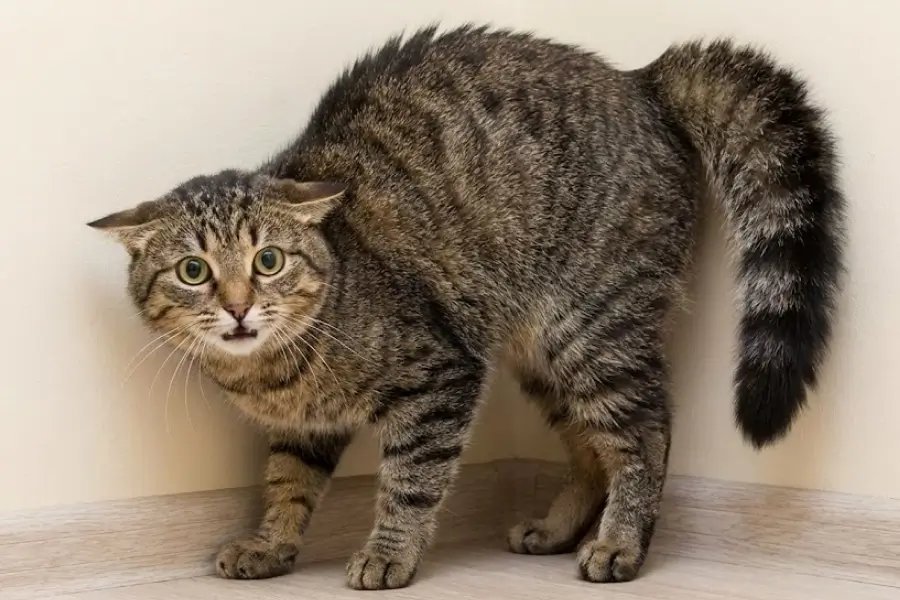
- The bottle brush, with tail and body fur standing on end. Fear or defence. The cat is making itself look bigger because something has frightened it, and handling a cat in this state is how people get hurt.
- Tucked tight against the body or between the legs. Fear or appeasement. This cat wants to be smaller and less noticeable, and the kind response is distance.
The neutral ones
- Straight out behind, a little below horizontal. Calm and relaxed, simply watching the world.
- Low and very still in a cat that is normally active. Worth noticing. A healthy cat uses its tail constantly, and a tail that has gone quiet alongside any change in eating, grooming or hiding is one of the quieter signs of pain.
Read the whole cat
The tail is the loudest signal and it is not the only one. Ears turned back or flattened, a hard unblinking stare, whiskers pushed forward, or a body gone rigid all carry the same information, and they usually arrive together.
The useful habit is checking the tail before you reach out rather than after. Most cats give plenty of notice. The problem is almost never that the cat did not warn you.












0 Comments