
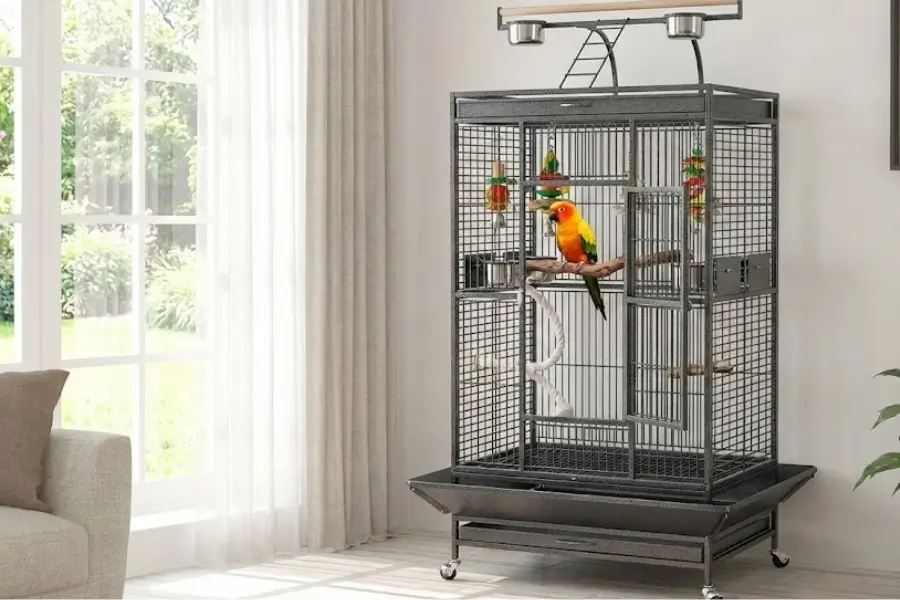
A cage is not storage. It is where a bird spends most of its life, and nearly every common behaviour problem in pet birds traces back to a cage that was too small, too bare, or in the wrong room.
Here is what actually matters, roughly in order of how much difference it makes.
Size, and which dimension counts
The minimum is a cage in which the bird can fully extend both wings without touching anything, and move between perches by flying rather than climbing.
- Width matters more than height for most species. Birds fly horizontally, and a tall narrow cage is mostly unusable space.
- Bar spacing has to suit the bird. Too wide and a head goes through and gets stuck, which is how birds are killed in cages. Too narrow and toes catch.
- Buy the biggest you can fit and afford. Nobody has ever regretted a cage being too large.
What it is made of
Birds chew the bars, so the cage is something they will ingest small amounts of.
- Powder-coated wrought iron or stainless steel. Durable, non-toxic, easy to clean.
- Never lead or zinc. Galvanised wire is a zinc source, which makes a lot of cheap and second-hand cages a poisoning risk.
- Avoid anything rusting or with paint chipping off, including inherited cages that look fine at a distance.
- Latches that a bird cannot work. Parrots in particular are methodical about this, and many learn simple catches within days.
Where it goes
- Somewhere the household actually is. Birds are social and want to be near their flock, and a bird in a spare room is an isolated bird.
- Never in or near the kitchen. Fumes from overheated non-stick cookware kill birds quickly and without warning, and this is the most common avoidable death in pet birds.
- Out of direct sun, which overheats a cage the bird cannot leave, and away from draughts from windows and air conditioning.
- Against a wall on at least one side. A cage exposed on all four sides gives a prey animal nowhere to feel covered.
The inside
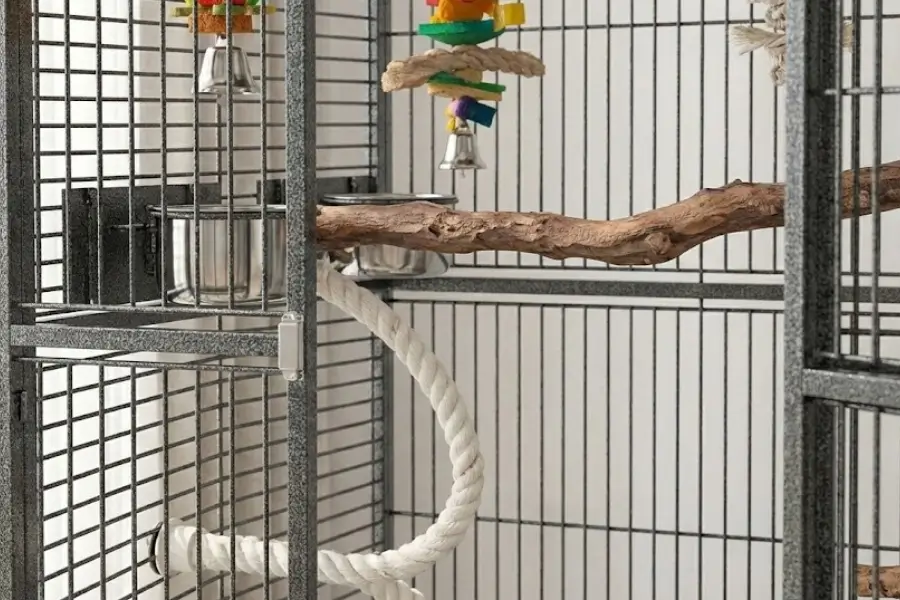
- Perches of varying diameters and textures. Natural branches such as manzanita or java wood exercise the feet and spread the pressure. The uniform dowels that come with most cages are the main cause of foot problems, so treat them as packaging rather than equipment.
- Toys covering foraging, shredding and puzzles, and rotate them weekly. A toy that has been there a month has stopped being a toy.
- Stainless steel or ceramic bowls, positioned where droppings cannot reach them and not directly under a perch.
- Leave flying room. A cage packed with toys is as unusable as an empty one, so keep the middle clear and the clutter at the edges.
Keeping it clean
- Daily: change the liner, wash bowls in hot soapy water.
- Weekly: scrub the tray and grate and go over the whole cage with a bird-safe cleaner. Never bleach or ammonia near a bird, and let everything dry and air before the bird goes back.
Get the size, the metal and the location right and most of the rest is adjustable later. Those three are the ones that are expensive to fix once you have bought the wrong thing.












0 Comments