
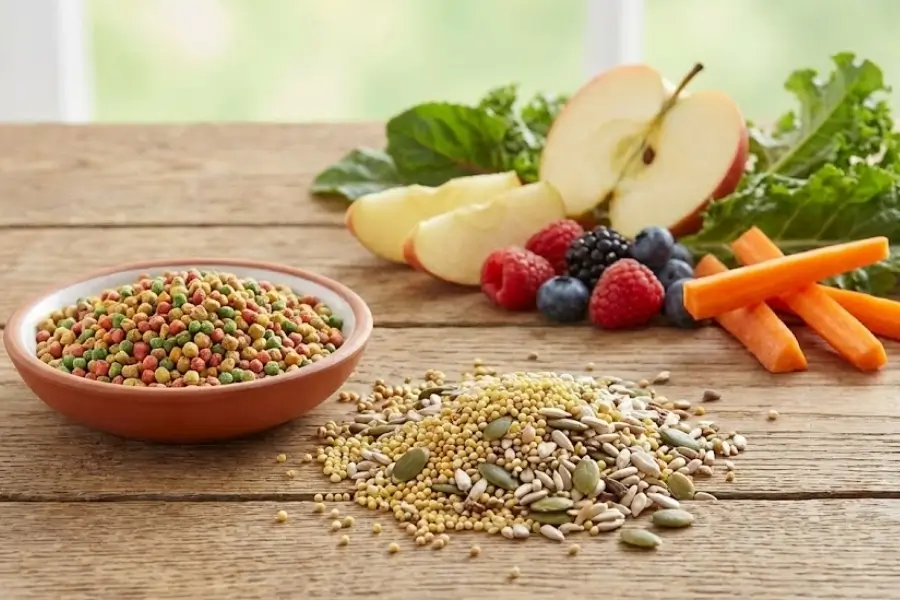
The image of a bird with a bowl of seed is still the default, and it is the single biggest cause of poor health in pet birds. Seed is not bad food. It is incomplete food, and used as the whole diet it produces obesity and disease.
The workable version is pellets as the base, fresh produce daily, and seed doing the job it is actually good at.
What the plate should look like
- Pellets: roughly 60 to 80 percent of daily intake. A formulated pellet is nutritionally complete, and because every piece is the same there is nothing to pick around.
- Fresh vegetables and fruit: roughly 10 to 20 percent.
- Seed and nuts: a small part of the day, as treats and as enrichment rather than as a meal.
Where seed does belong
Seed is genuinely useful. It brings healthy fats, birds love it, and it is the best training currency you have.
- Millet, good for small birds and excellent for foraging and taming.
- Safflower, lower in fat than sunflower.
- Pumpkin seeds, a decent protein source.
- Flax, rich in omega-3s, which shows in feather condition.
A millet spray is the most effective training tool in the cupboard and also calorie-dense, so it works best rationed rather than clipped in and left.
Fresh food, daily
Vegetables should be the bulk of the fresh portion, offered every day.
- Dark leafy greens such as kale, chard and dandelion. Spinach is fine occasionally, but it is high in oxalates which bind calcium, so it should not be the green you default to.
- Carrot, cooked sweet potato, broccoli and bell peppers.
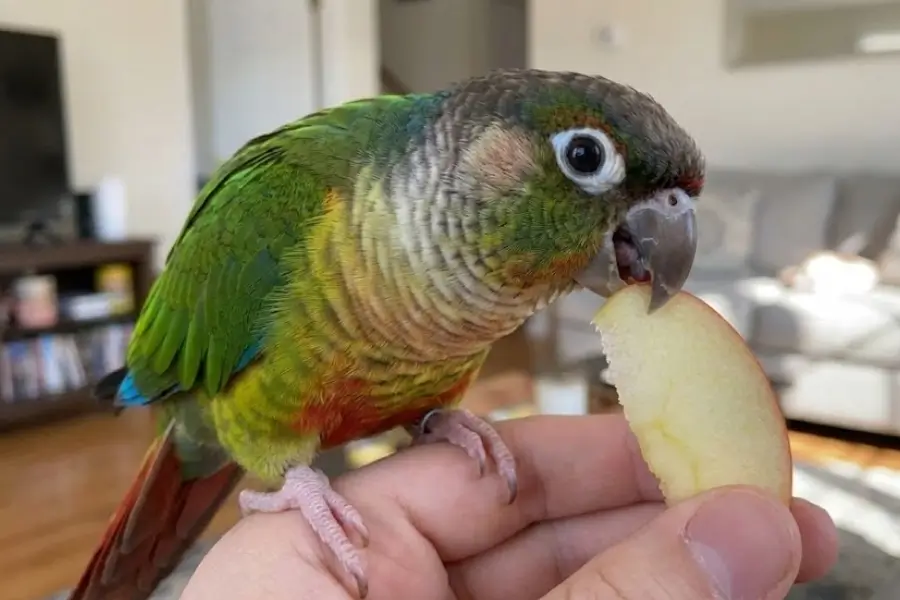
- Fruit in smaller amounts because of the sugar. Berries, apple with the seeds removed, melon and banana.
Chop it small, offer it in the morning when they are hungriest, and take away anything uneaten after a few hours. Expect refusals. Most birds need a new food offered many times before they try it, and the trick is persistence rather than variety.
Treats worth using
- Nuts. Almonds, walnuts and pecans, plain and unsalted. High value, so they make excellent rewards and poor snacks.
- Sprouted seeds, which gain vitamins in the sprouting and digest more easily. A good bridge food for a bird you are moving off seed.
- Small amounts of cooked brown rice, wholewheat pasta or hard-boiled egg.
Never
- Avocado. Contains persin, causes heart damage, and kills birds.
- Chocolate and caffeine.
- Fruit pits and apple seeds, which carry traces of cyanide.
- Onion and garlic, which damage red blood cells.
- Alcohol, salt and sugary foods. A bird is small enough that quantities we would not notice matter.
The practical point
If your bird is currently on seed alone, do not simply swap the bowl. Birds will genuinely starve rather than eat something they do not recognise as food, so the change has to be gradual and monitored.
Talk to an avian vet before you start, and weigh the bird through the transition. A gram scale is the only honest measure of whether a new diet is being eaten.












0 Comments