
Birds are intelligent, curious and social, and in the wild they spend the day foraging, flying and interacting. In a cage, all of that is gone unless somebody puts it back.
So yes, birds get bored, and boredom in a bird does not look like idleness. It looks like damage.
How boredom shows
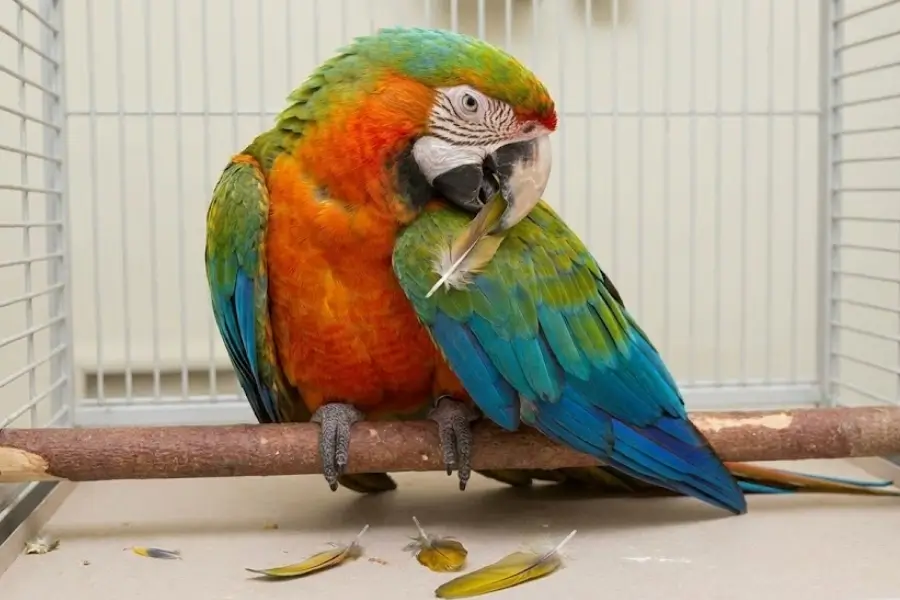
- Feather plucking. The most serious sign, and the hardest to reverse once it becomes habit. A bird chews or pulls out its own feathers, leaving bald patches and damaged skin.
- Constant screaming. Repetitive calling that is not about anything in particular is very often an under-stimulated bird rather than a demanding one.
- Destructive chewing of things that were not offered, both in the cage and out of it.
- Sitting in one place, sleeping a great deal, and ignoring toys and people.
Plucking in particular should get a vet check as well, because skin disease, pain and nutritional problems cause it too, and treating it as boredom when it is not wastes time the bird does not have.
Foraging, which does the most work
Finding food occupied most of a wild bird’s day. A full bowl removes that entirely, which is why foraging is the highest-value enrichment available.
- Start simple. Wrap treats in paper, hide food in a small cardboard box, knot it into a rope toy. It does not need to be bought.
- Move up to puzzle toys with levers and compartments once they have worked out the easy ones.
- It can occupy a bird for hours, slows down a fast eater, and turns eating into a problem to solve rather than a thirty-second event.
Shredding and chewing
Chewing keeps the beak in order and relieves stress. A bird needs to destroy things, so the only real question is what.
- Bird-safe wood, cardboard, paper, palm leaves and untreated cotton rope.
- Unwaxed paper cups and cardboard tubes cost nothing and work extremely well for small birds.
- Hang them in different parts of the cage so getting to them involves moving.
Puzzles and dexterity
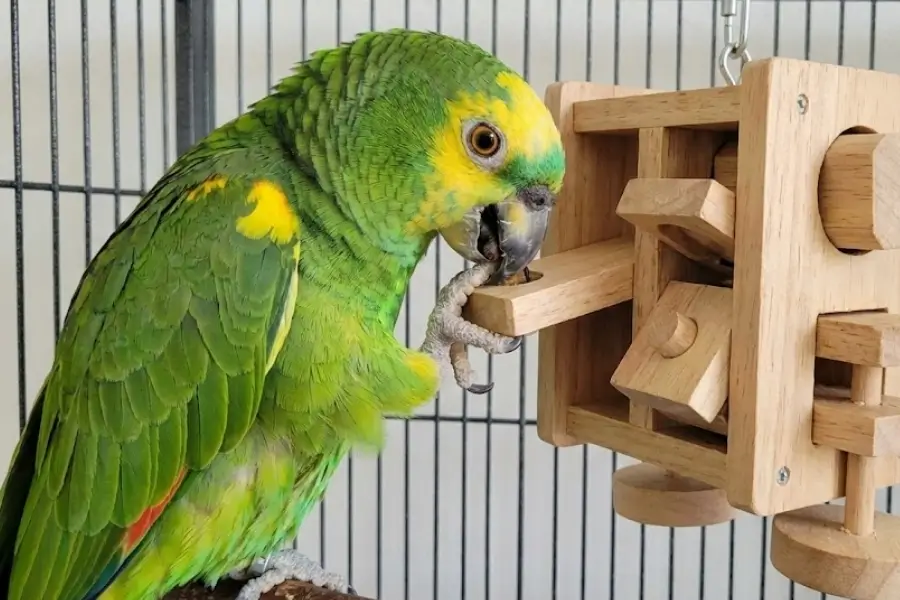
- Toys with moving parts, wooden blocks on a chain, simple stacking toys.
- For a larger parrot, nuts and bolts they can unscrew are a long-lasting challenge and genuinely absorbing.
- The benefit is confidence as much as occupation. A bird that has solved something tries the next thing.
Foot toys, swings and ladders
Small light items a bird can hold and throw. Plastic balls, short lengths of safe rope, wooden dowels. Throwing things is play, and it costs almost nothing to provide.
Swings and ladders add balance work and change the view, which matters more than it sounds in a space the bird has memorised.
The part that makes all of it work
Rotation. A toy that has been there for a month is furniture, however expensive it was.
- Keep more toys than are in the cage and swap them every week or two. A toy that has been away comes back new.
- Watch which textures and shapes actually get used. Birds have strong preferences, and there is no point buying more of something they ignore.
One more thing worth saying: no toy replaces company. Birds are social, and the most enriched cage in the world is still a bird on its own. Time out with you, or another bird where the species suits it, is the part the toys are supplementing.












0 Comments