
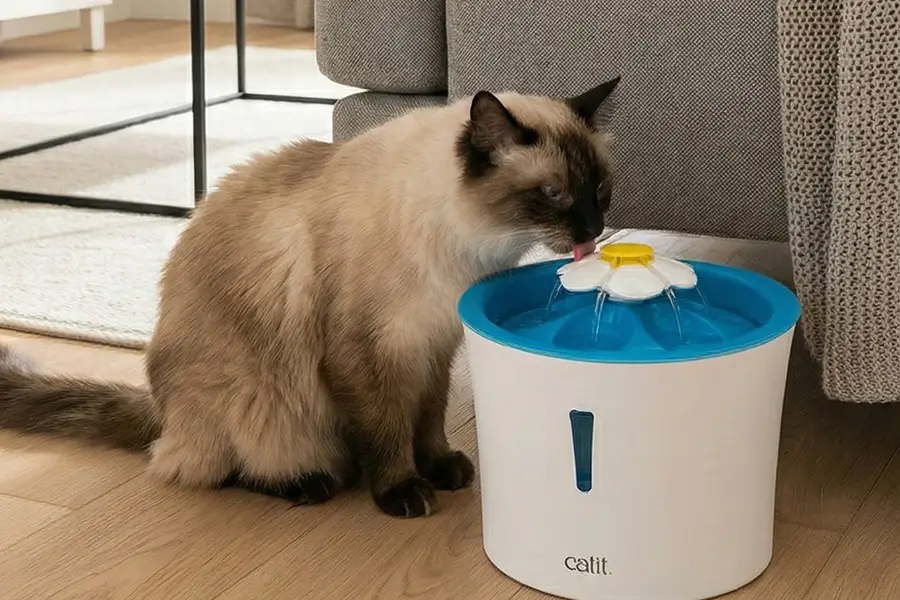


Cats are peculiar about water. The clean bowl goes untouched, and then five minutes later there is a cat drinking out of the toilet with real enthusiasm.
Fountains exist because moving water reads as safe to a cat in a way that still water does not. The Catit Flower is the one most people meet first, and here is what it does well and what it asks of you in return.
The design
A small white pot with a green flower on top. It is plastic, which keeps it light and cheap and means it does not have the solidity of a ceramic or steel fountain. Catit state the material is BPA-free.
If your cat is prone to chin acne, plastic is worth a thought, since a plastic rim against the chin at every drink is one of the suspected contributors. It is not a certainty and plenty of cats are unaffected.
The footprint is small and it holds around three litres, which is a good amount for one or two cats and means you are not filling it daily.
Three flow settings, which is the real feature
You change how the water moves by adding or removing parts of the flower, and this is the reason to choose this fountain over a fixed one.
- Flower out entirely. A wide bubbling surface with no splashing, which suits a nervous cat.
- Flower in, yellow centre out. Water bubbles up through the petals. Movement without any noise or spray, and this tends to be the setting most cats settle on.
- Yellow cap on. Water streams down the petals like a running tap. If your cat has an existing relationship with the bathroom sink, start here.
Being able to try all three matters more than it sounds. Cats have specific preferences about water and you cannot guess which one you have.
Does it get them drinking
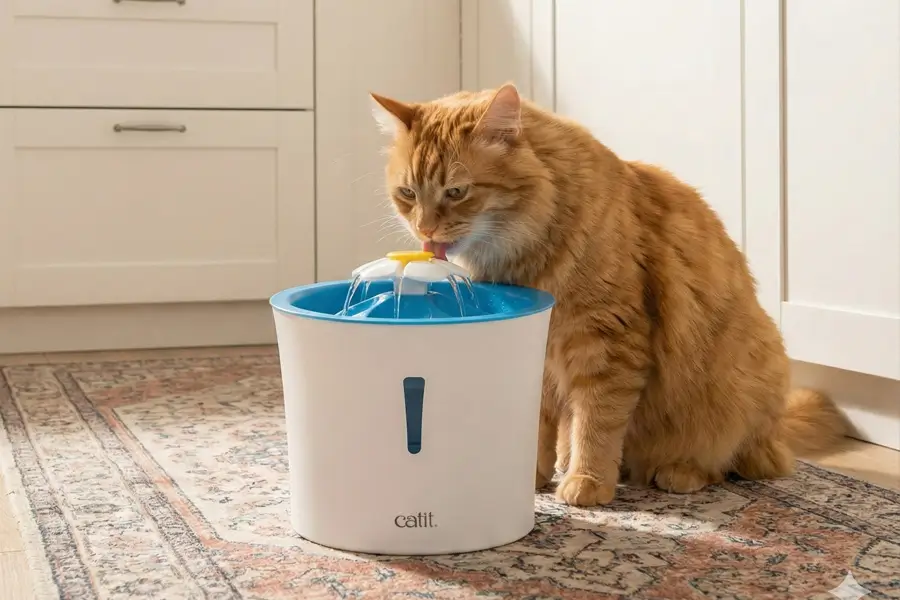
Movement is what catches a cat’s eye, and a fountain reliably gets investigated where a full bowl is ignored. Expect pawing at it before any drinking.
The filter is doing something too. It takes out magnesium and calcium and reduces chlorine smell, and if your tap water is noticeably chlorinated that alone can be the difference. Cats smell it long before we do.
The reason any of this is worth the effort is that cats are built to get most of their water from prey and are poor at drinking enough on a dry diet. Low water intake is tied to urinary and kidney problems, which are common and expensive.
The cleaning, which is the catch
This is the part that decides whether you keep using it. Rinsing is not enough. The flower comes apart, and the pump comes apart too.
The impeller, the small spinner inside the pump, has to be cleaned properly. Skip it and it goes slimy, the flow drops and the pump starts to rattle. Plan on a full strip-down weekly and a filter change on the schedule in the manual.
On noise: it is close to silent when it is full and clean. When the level drops it growls. That is a useful prompt during the day and considerably less welcome at two in the morning, so it is worth topping up before bed.
Who it suits
A good first fountain, particularly if you do not yet know what kind of water your cat prefers. The three settings make it a way of finding out rather than a guess.
If you already know your cat likes a streaming tap, or if plastic is a problem for their chin, a ceramic or stainless fountain is the better long-term buy. And if nobody in the house will strip a pump down once a week, no fountain is the right purchase, because a dirty fountain is worse than a clean bowl.



0 Comments