
The rows of little plastic cups on the shop shelf have taught a whole generation of fish keepers something untrue: that a betta is fine in a bowl.
They are not, and the reason is not sentimentality. Each of the usual justifications for the bowl turns out to be a misunderstanding of the animal. Here they are in turn, and what a betta actually needs instead.
The puddle story
The claim is that bettas come from tiny stagnant puddles, so a bowl is roughly authentic. It is a real habitat described very badly.
They are native to the rice paddies, floodplains and canals of Southeast Asia, particularly Thailand. Those waters do get shallow in the dry season, but they are part of a connected system that spreads across enormous areas when the rains come. The wild betta has territory to patrol and things to hunt. A bowl reproduces the worst week of its year and calls it home.
The idea that they prefer small spaces
The version you usually hear is that the long fins make swimming hard, so they would rather not have far to go. There is a grain of truth in it, which is that bettas dislike strong currents, and that grain has been stretched into something false.
They are active fish. Given room they patrol, investigate, and interact with what is in the tank. Denied it, you get lethargy, muscle wastage and a weaker immune system. A bored betta looks calm, which is exactly why this myth survives.
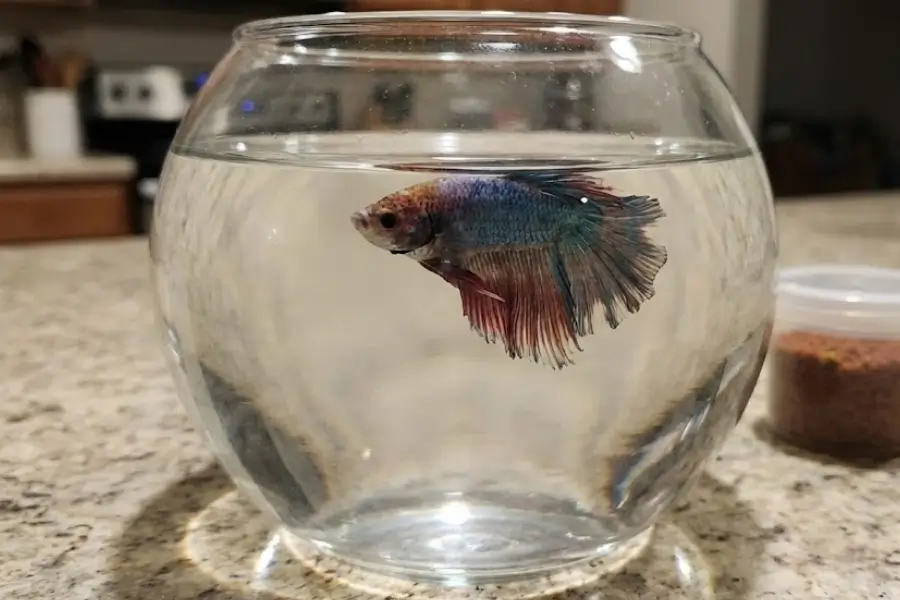
The dangerous one: no filter, no heater
This comes from the labyrinth organ, which lets a betta gulp air from the surface. It is a real adaptation and it does let them survive poor water for a while. Surviving is doing a lot of work in that sentence.
- Filtration. Bettas produce waste like any fish, and in a small volume ammonia and nitrite climb fast. Without a filter and an established nitrogen cycle, the fish is swimming in its own toxins.
- Heating. They are tropical, wanting roughly 78 to 80 degrees Fahrenheit. Kept cooler, metabolism slows and immunity drops, and fin rot follows. A heater is not optional.
What the bowl actually costs
- Lifespan. A properly kept betta lives three to five years. Bowl bettas rarely see two.
- Disease. Cold, small and dirty is a combination that produces illness reliably.
- Quality of life. None of the behaviour that makes them interesting is available in a bowl.
What they actually need
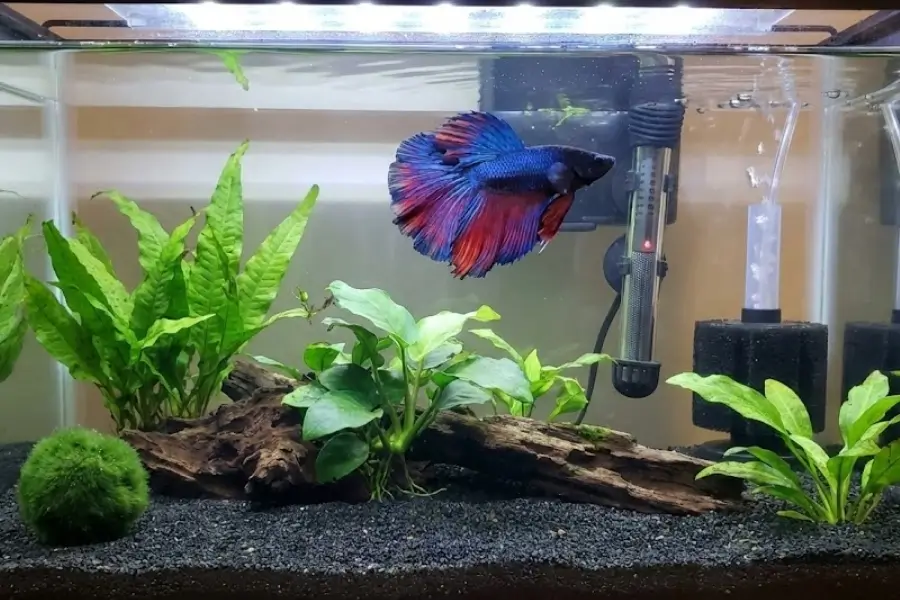
- Five gallons minimum, for swimming room and because a larger volume holds its water chemistry steady.
- A gentle filter. A sponge filter suits them well, since the aim is clean water without a current to fight.
- An adjustable heater holding 78 to 80 degrees.
- Live or silk plants to rest in and a cave or two. Plastic plants with hard edges tear their fins.
- A partial water change of around a quarter, weekly.
The point
None of that is expensive or difficult, and it is a long way from the tank-of-the-month hobby people imagine when they picture an aquarium.
The reason the bowl myth persists is that bettas are tough enough to endure it for a while, so nothing obviously goes wrong until it does. Give one five gallons and a heater and you get a completely different fish: alert, curious, and interested in you. That is what people are missing.












0 Comments