
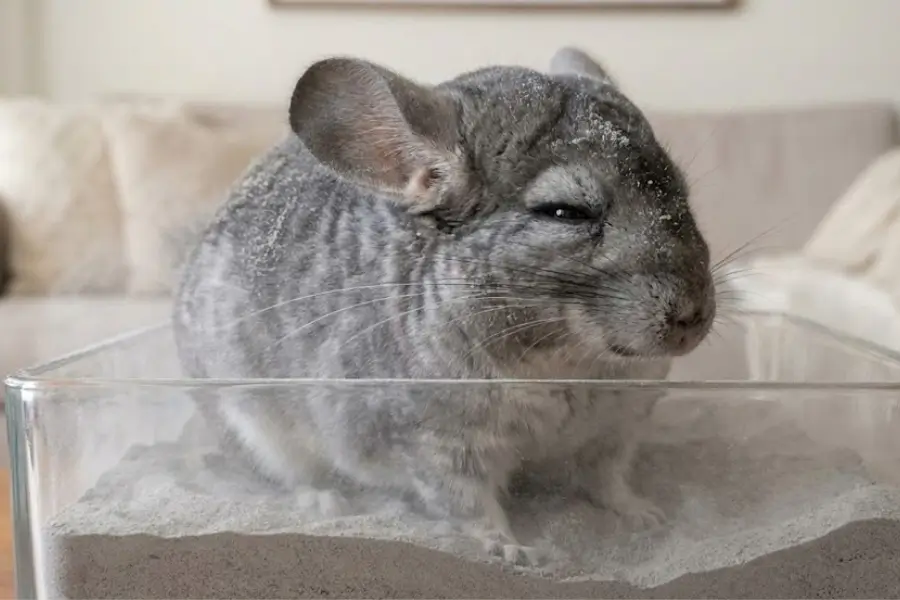
Almost every pet gets a bath at some point. A chinchilla gets dust, and getting this wrong can kill one, which is why it is usually the first thing an experienced owner tells a new one.
The reason sits entirely in the fur, and once you understand the fur the rule stops sounding like superstition.
The densest coat of any land mammal
Chinchillas come from the high Andes, where the air is cold and very dry. The coat evolved for exactly that.
A human grows one hair from each follicle. A chinchilla grows somewhere between fifty and eighty. That density is what traps body heat in freezing air, and it is also the reason water is such a problem, because a coat that keeps cold out just as effectively keeps water in.
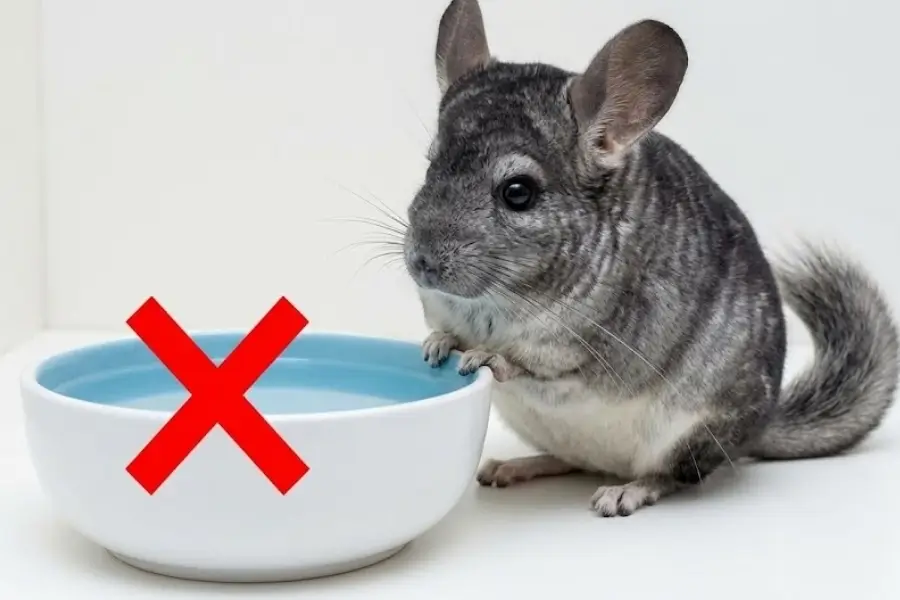
What water actually does
It soaks through to the skin and then stays there. Chinchilla fur does not shed water or dry the way other coats do, and the damp sits against the skin for a long time.
- Hypothermia. Wet fur has lost the insulation that is its whole purpose, and evaporation pulls heat out of the body while it happens. Core temperature can drop dangerously.
- Fungal infection. Warm, damp and airless against the skin is close to ideal for ringworm, which is the most common and most stubborn consequence of a wet chinchilla.
- Matting. The fine hairs clump, the mats pull on the skin, and the animal is sore before anything visible has happened.
Why dust works
In the wild they roll in fine volcanic ash, and the captive version is dust made for the purpose. It is fine enough to reach the skin through the whole depth of the coat.
Down there it takes on the oils, dirt and moisture, and the shake at the end throws all of it back out. The particles also push the individual hairs apart, which is what keeps the coat airy rather than flat, and is why a chinchilla after a dust bath looks twice the size it did before.
How to give one
- Use dust sold for chinchillas. Never play sand or beach sand. The grains are too coarse and they damage both the fur and the skin.
- Use a proper bath house or any heavy container that will not tip, such as a glass baking dish or a solid ceramic bowl.
- Put about an inch of dust in the bottom.
- Put it out during time outside the cage and leave them to it. Nobody has to teach a chinchilla this part.
- Ten to fifteen minutes, two or three times a week.
Take it out afterwards. A dust bath left in the cage becomes a litter tray within a day, and too much bathing dries the skin out, so the limit is doing a job rather than being fussy.
The rule, in one line
Keep a chinchilla dry. If one does get wet, towel off what you can and keep it somewhere warm and draught-free until it is completely dry down to the skin, and call an exotics vet if the fur stays damp or the skin looks irritated.
Dust baths are not a substitute for a proper wash. For this animal, they are the proper wash, and they are considerably more fun to watch.












0 Comments