
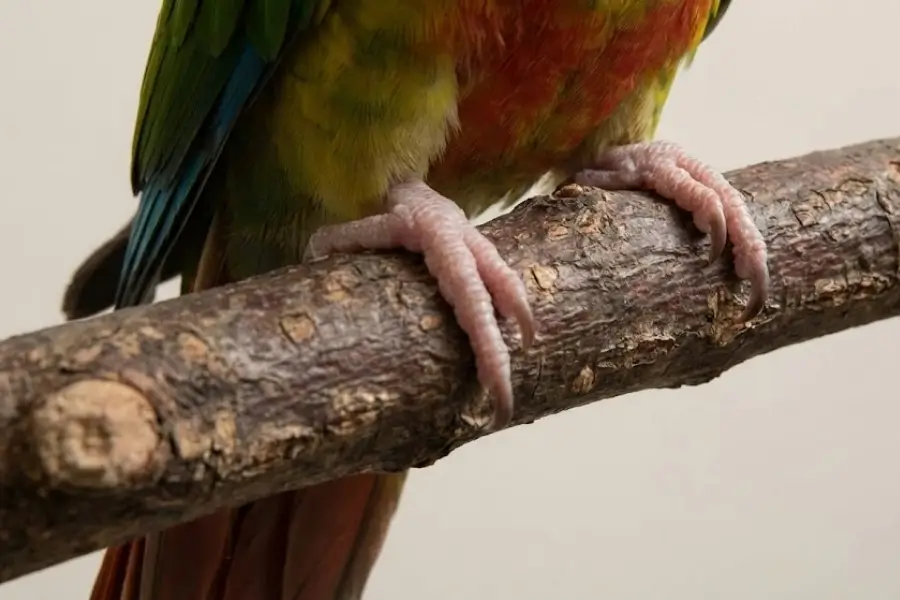
A bird stands on its feet essentially all the time. The perch is the bed, the chair and the gym, and the consequence of getting it wrong is bumblefoot, a painful infection of the footpad that is difficult to treat once established.
The fix is not one perfect perch. It is variety, and that is the part most cages get wrong from the day you buy them.
The dowel problem
Almost every cage comes with smooth wooden dowels of one uniform diameter. They are cheap to make and they are the single most common cause of foot trouble in pet birds.
A perch of constant thickness means the foot grips in exactly the same position for hours. The same points bear the weight all day, circulation is restricted in the same places, and tissue damage follows. Phase them out, or keep one somewhere the bird barely stands.
Natural branches, which are the answer
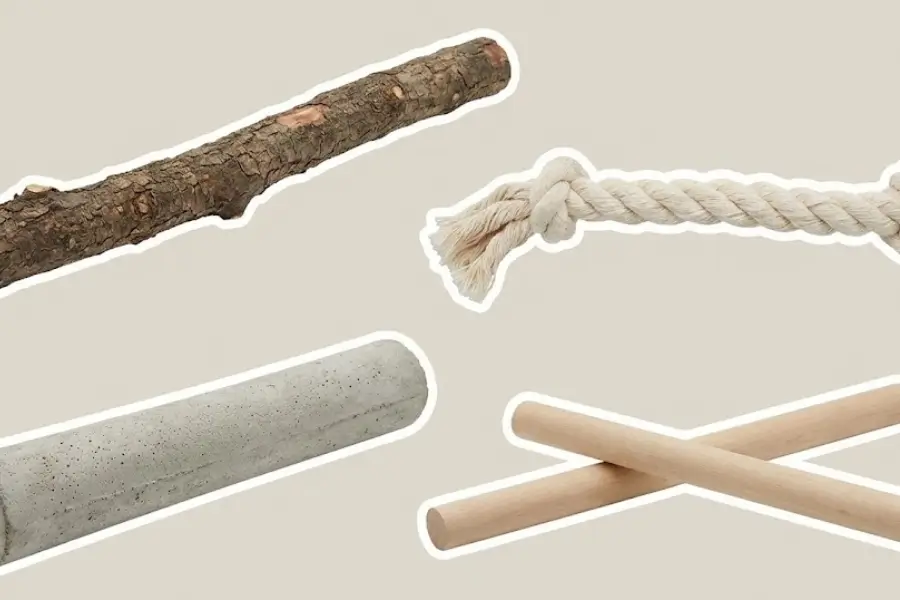
A real branch has irregular diameters, curves, knots and changing bark texture. Every few inches the foot has to adjust, which means different muscles working and the pressure landing somewhere new.
- Bird-safe woods include manzanita, java wood, dragonwood, and fruit tree branches such as apple and pear.
- They must be pesticide-free and properly cleaned before they go in.
- The rough surface also keeps nails and beak worn down naturally, which reduces how often anything needs trimming.
The other types, and where each belongs
- Rope perches. Soft, flexible and a genuine relief from hard surfaces, particularly for an older bird or one with stiff joints. Check them every day and trim any fraying, because a loose thread catches a toe or gets swallowed.
- Platform or shelf perches. A flat wooden or wicker surface lets a bird stand with the foot fully flat and no gripping at all. Excellent for sleeping and close to essential for a bird already dealing with a foot problem.
- Abrasive pedicure perches, made of concrete, sand or pumice. Useful for keeping nails down, and they must never be the main perch or the sleeping perch. Put one where the bird stands briefly, next to a food or water dish. Used as a primary perch they cause exactly the sore feet you were trying to avoid.
Sizing and placing them
The diameter test is simple. Gripping the perch, the toes should not wrap the whole way round and meet. Aim for the foot covering roughly two thirds to three quarters of the circumference.
- Put a comfortable natural branch at the highest point in the cage, because that is where most birds choose to sleep and it is where they spend the longest unbroken stretch.
- Space perches so the bird has to climb and hop between them. Movement is the point.
- Never position one directly above a food or water dish.
What a good setup looks like
Three or four different perch types at several diameters, with natural branch doing most of the work and the specialised ones placed deliberately.
It is a cheap change with a large effect. Check the soles of your bird’s feet occasionally while you are at it: smooth, evenly coloured skin is what you want, and any redness, shine or flattening is worth a vet’s opinion early rather than late.












0 Comments