
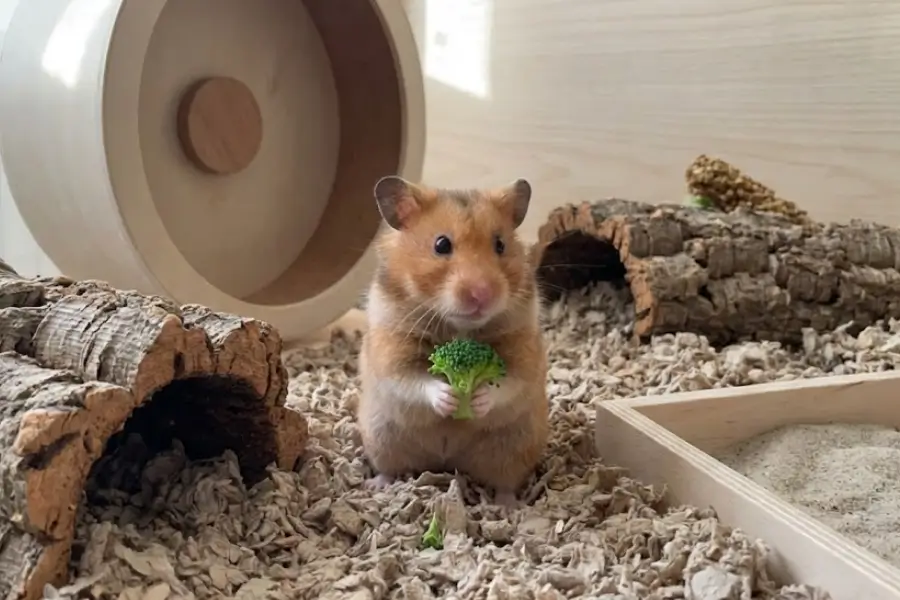
Hamsters are sold as an easy first pet and the care is genuinely simple, but two of the standard shop recommendations, cage size and wheel size, are wrong often enough to cause real problems.
Here is the whole of it, with the parts that actually matter flagged.
Choosing one
- Syrians are larger and strictly solitary. They must live alone, and housing two together ends badly. Dwarfs are smaller and can sometimes be kept in pairs if raised together from young.
- Look for an active animal, mostly in the evening, with bright eyes, clean fur and nothing damp around the nose or the back end.
- Set the cage up completely before you bring one home. Arriving into a finished habitat rather than a building site saves several days of stress.
The cage, which is where most setups fall short
- Size. The pet shop standard is far too small. A Syrian wants at least 600 square inches of unbroken floor space, a dwarf at least 450. Unbroken is the key word: two small levels do not add up to one decent floor.
- Type. A wire top on a deep plastic base ventilates well. A glass tank, 20 gallon long at minimum and better at 40 gallon breeder, holds deep bedding and is genuinely escape-proof. Avoid the colourful tube setups, which are too small and miserable to clean.
- Bedding. Aspen shavings or paper-based bedding, unscented. Never pine or cedar, whose oils cause respiratory disease. Give at least 4 to 6 inches, because burrowing is a need rather than a nicety.
- Hides. At least one, more if you can. They are prey animals and a hamster with nowhere to disappear to is a stressed hamster.
- Location. Quiet, out of direct sun and draughts, away from other pets, and held between 65 and 75F.
Food and water
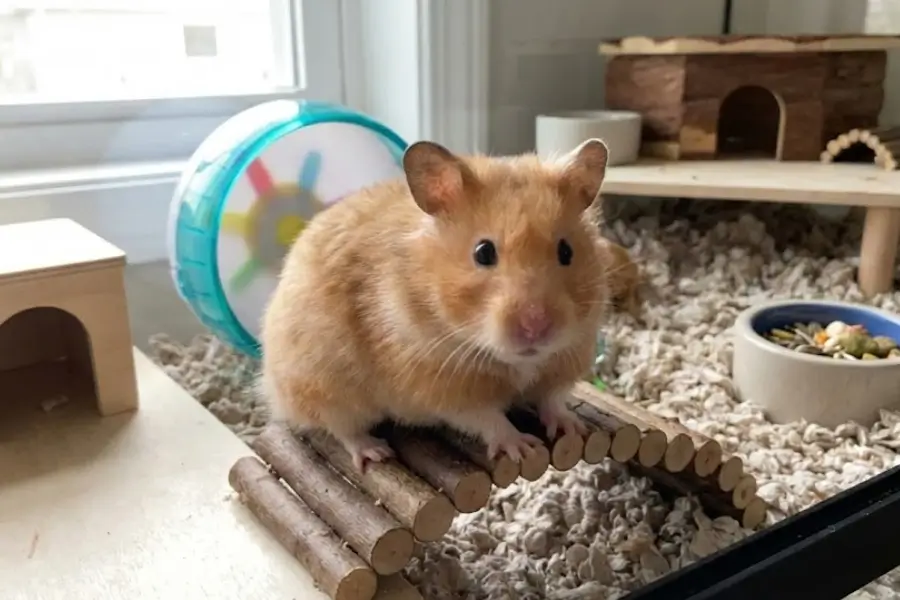
- A good commercial hamster mix as the staple, balanced across seeds, grains and pellets. Avoid the ones heavy with dried fruit, since hamsters pick those out first and leave the rest.
- Fresh food two or three times a week in small amounts. Broccoli, carrot, cucumber, spinach, a little apple or berry. Take out anything uneaten after a day.
- Water always available, from a bottle with a metal spout rather than a bowl. Check it works every day, because a blocked spout is not obvious until the animal is dehydrated.
- Treats sparingly, and best used for taming. A mealworm or a scrap of plain cooked chicken works well.
Cleaning and health
- Daily: take out soiled bedding and leftover fresh food, refill the water.
- Weekly: replace about half the bedding and mix the new in with the old. Keeping their scent in the cage matters, and a completely fresh cage is disorienting rather than pleasant.
- Monthly: full clean of cage, wheel and accessories with mild soap, rinsed and dried thoroughly before fresh bedding goes in.
- Watch for lethargy, weight loss, fur loss, overgrown teeth or nails, and wetness around the tail. Wet tail is serious and moves fast, and it needs a vet the same day.
- Find an exotics vet before you need one. Many general practices do not see hamsters.
Taming
- Leave them alone for the first two or three days. Sit by the cage and talk so your voice becomes familiar.
- Then offer a treat from your fingers and let them come to you rather than reaching in after them.
- Scoop from below with both hands. Never reach down and grab from above, which is exactly what a bird of prey does and is read that way.
- Keep early sessions to five or ten minutes, over a bed or sofa in case of a jump. Hamsters jump without checking the drop.
- Some tame in a week, some stay shy for life. Neither is anything you did.
Exercise and enrichment
- A wheel is essential, and the size is not negotiable. Solid surface, never wire rungs, and large enough that the back stays straight while running. That means 11 to 12 inches for a Syrian and 8 to 10 for a dwarf. A wheel that curves the spine causes long-term damage.
- Chews. Wooden blocks, cardboard tubes, applewood sticks. The teeth never stop growing, so this is dental care rather than entertainment.
- A sand bath, using chinchilla sand rather than dust, which they will roll in happily.
- Supervised time in a sealed playpen once they are tame, with tubes and hides to explore.
One thing not to buy: an exercise ball. They are still sold everywhere, and welfare guidance has moved firmly against them. A playpen does the same job without taking away the animal’s senses.












0 Comments