
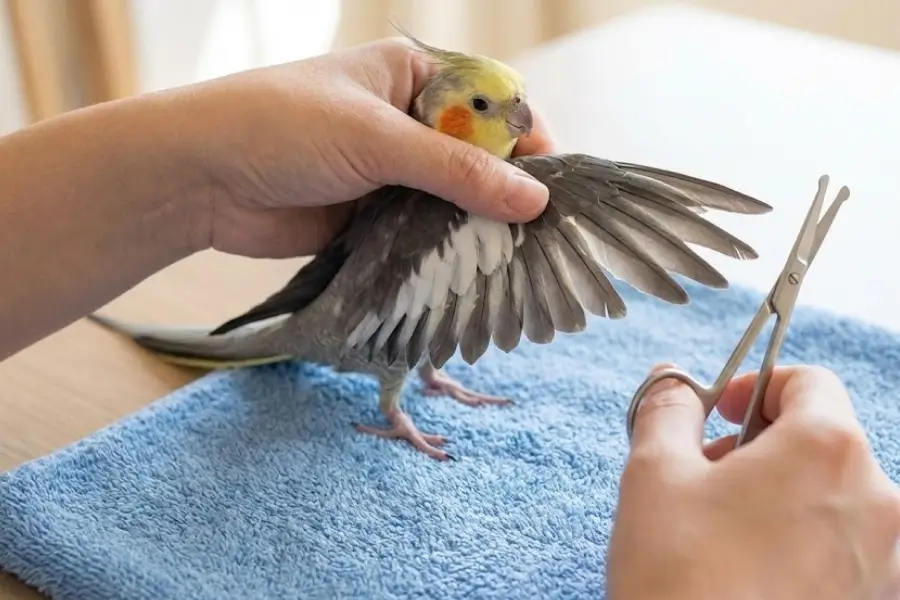
Wing trimming is a safety measure rather than a way of grounding a bird. Done properly it limits how much height a bird can gain, which is what stops escapes through an open door, collisions with ceiling fans and hard hits into windows.
It also carries real risk, almost all of it concentrated in one thing: cutting a blood feather. If any part of this makes you uneasy, an avian vet or an experienced groomer will do it quickly and cheaply, and that is a completely reasonable choice.
Before you start
- Small sharp scissors with rounded tips.
- A soft towel.
- Styptic powder or cornflour, to stop bleeding if a blood feather is cut. Have this in your hand before you begin, not in a cupboard.
- A second person. Doing this alone is harder and more dangerous than it looks.
- A calm bird. If they are worked up, stop and do it another day.
Holding the bird safely
This is the part that matters most, because birds have no diaphragm and breathe by moving the chest wall. Squeeze the chest and the bird cannot breathe at all.
- Wrap the body loosely in a towel with the head out. It keeps them calm and keeps you from being bitten.
- The body rests in your palm with your hand steadying the head and neck. Firm at the head, loose everywhere else. Never grip around the chest.
- Your helper extends one wing gently and holds it open.
Knowing what not to cut
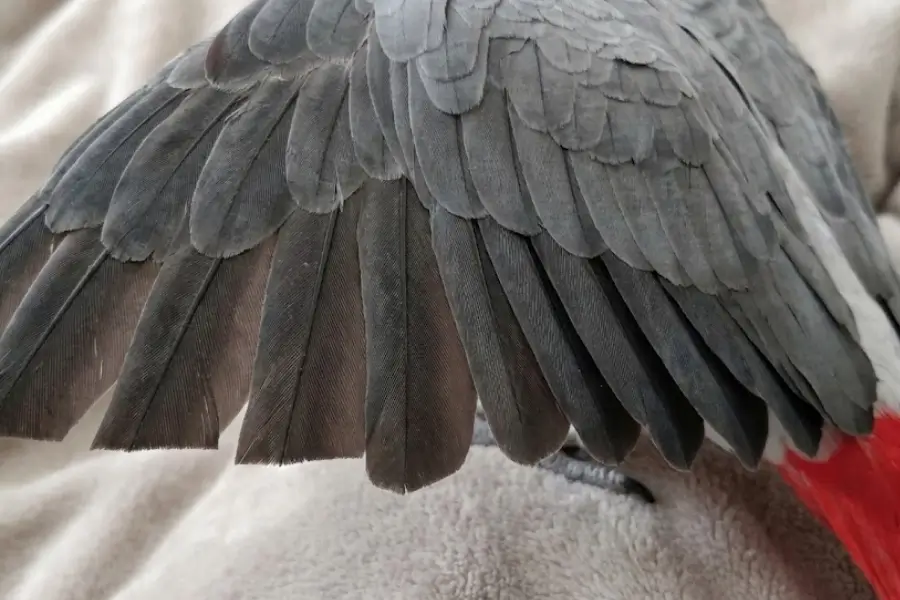
Only the primary flight feathers, the long ones at the outer edge of the wing, are trimmed. Usually the outermost five to seven.
A blood feather is one still growing, with a live blood supply inside the shaft. It looks dark, opaque and thicker than the mature feathers around it, often with a waxy sheath at the base. Mature feathers are pale and hollow.
Check every single feather against the light before you cut it. A cut blood feather bleeds hard and does not stop on its own, and a bird can lose a dangerous amount of blood quickly. If it happens, apply styptic powder with pressure and ring your vet, because the feather often has to be pulled to stop it.
Making the cut
- Cut each primary just below the covert feathers, the shorter ones layered over the base of the primaries. That leaves a tidy edge and keeps the cut ends protected.
- Trim both wings equally. Always.
- Never do a one-wing trim. A bird with one wing trimmed cannot balance and spins on the way down, and it injures birds regularly. It is still occasionally recommended, and it is wrong.
Afterwards
Offer a treat and let them preen. Preening after handling is how a bird resets, and it is a good sign.
Then test it somewhere carpeted with nothing to hit. Encourage a short flight. A correct trim gives a gentle glide down to the floor. If the bird drops abruptly you have taken too much, and there is nothing to do but wait for the moult. If it gains height, take one more feather from each side and test again.
Take less than you think. You can always remove another feather, and you cannot put one back.
One thing to think about first
Trimming is a genuine trade. It prevents specific accidents and it costs a bird its flight, which is exercise, confidence and the main way it escapes anything frightening.
Plenty of keepers now choose full flight with a properly bird-proofed home and strict door discipline instead. Neither answer is universally right, and it is worth a conversation with your avian vet about your particular bird and your particular household rather than treating the trim as routine.












0 Comments