
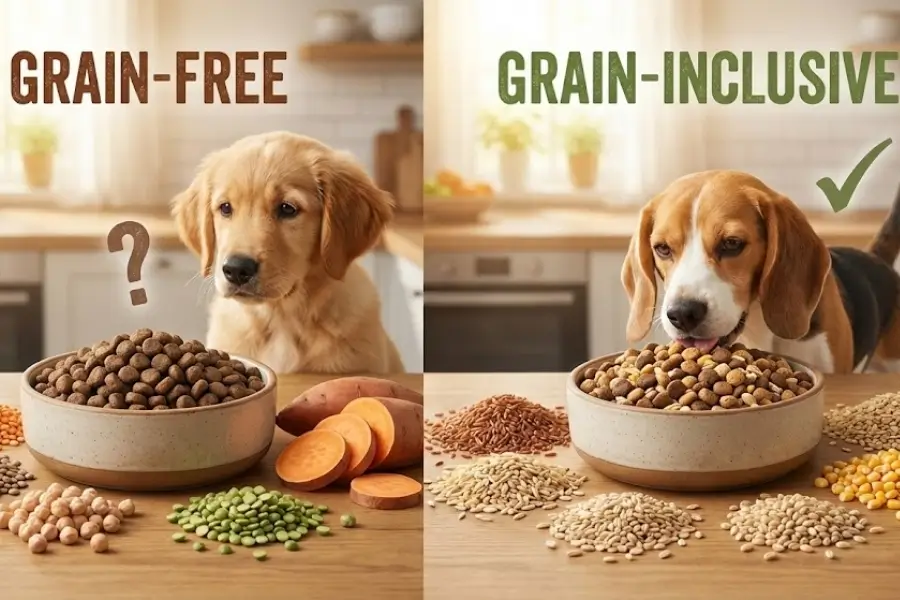
Grain-free dog food went from a niche product for allergic dogs to the default premium option, largely on marketing rather than evidence. Then in 2018 the FDA opened an investigation into a possible link with a serious heart condition, and a lot of owners were left genuinely unsure what to feed.
Here is what is actually established, what is still open, and what to do about it.
Where the trend came from
Not from a discovery. The argument was that dogs descend from wolves, wolves do not eat grain, therefore grain is filler, and corn, wheat and soy were marketed as the cause of everything from itchy skin to low energy.
- Dogs are not wolves. Domestication changed their physiology considerably, and one of the clearest changes is that dogs carry genes for amylase, the enzyme that breaks down starch. Wolves do not. Dogs are functionally omnivores and digest grain perfectly well.
- True grain allergy is rare. Veterinary dermatologists consistently find the common food allergens are proteins: beef, dairy, chicken and lamb. Grain is well down the list. A dog with itchy skin and a dodgy stomach is far more likely reacting to the meat than the rice.
The DCM investigation
In July 2018 the FDA announced it was looking at a possible link between certain diets and dilated cardiomyopathy, a disease in which the heart’s main pumping chamber enlarges and weakens.
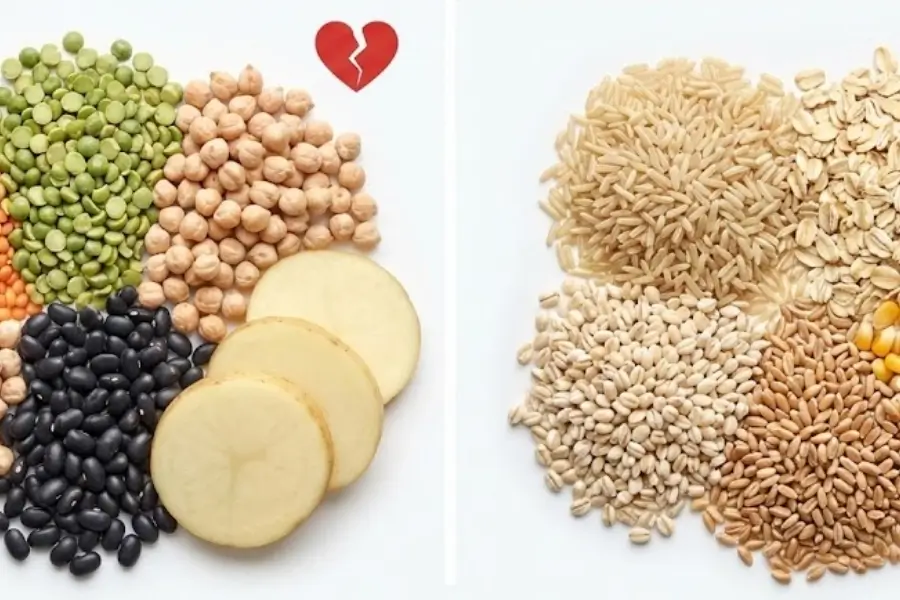
DCM is partly genetic and is expected in breeds such as Dobermans and Great Danes. What prompted the investigation was reports in breeds not predisposed to it at all, including golden retrievers and labradors. The common factor was diet, and specifically foods with peas, lentils, other pulses and potatoes high in the ingredient list, used to replace grain as the carbohydrate.
- The investigation has not concluded that grain-free food causes DCM. It found a strong correlation without establishing a mechanism.
- The leading theory involves taurine, an amino acid the heart depends on. Most dogs make their own from methionine and cysteine in meat, and there is evidence that heavy legume content may interfere with that process or reduce how well those precursors are absorbed. Lower taurine levels have been measured in dogs on some of these diets.
What to do
- Do not panic. If you are feeding grain-free and your dog is well, this is a conversation for your next appointment rather than an emergency.
- Do talk to your vet, particularly if the food lists peas, lentils or potato among its first few ingredients and your dog is not a breed with an inherited DCM risk. They can advise on a change and on whether heart screening is worthwhile.
- Choose manufacturers who employ full-time veterinary nutritionists, run AAFCO feeding trials rather than only formulating on paper, and have real quality control. That single filter removes most of the problem.
- Ignore the label language. Grain-free, ancestral, premium and holistic are marketing terms with no regulatory meaning. The nutritional adequacy statement and the manufacturer’s reputation tell you more than the front of the bag.
- Unless there is a diagnosed grain allergy, there is no evidence grain-free is healthier. Grain-inclusive food from established brands has fed millions of dogs for decades and has not been implicated. Whole grains bring fibre, vitamins and minerals.
The honest summary
Grain-free solves a problem most dogs do not have, and the ingredients used to replace the grain are the ones under investigation.
If your dog genuinely needs to avoid grain, your vet will say so and there are good options. If the reason you buy it is that the bag looked like the better choice, that is worth revisiting.












0 Comments