
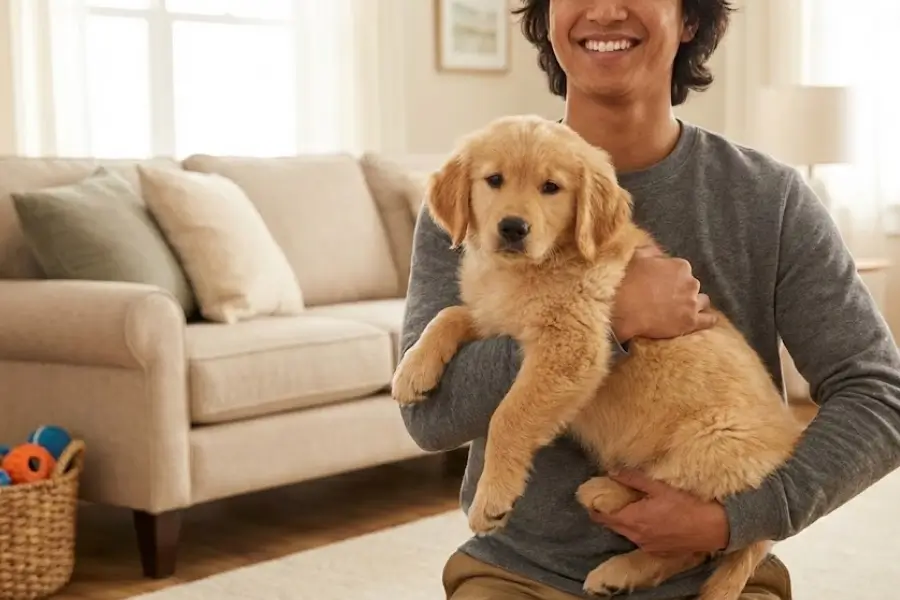
The first fortnight sets the pattern for everything afterwards. A dog arriving in a house with no routine and no rules learns that there are none, and unlearning that is harder than starting right.
Here is what to do first, roughly in order.
Before they arrive
- Put away anything toxic. Houseplants, cleaning products, medication, and food including chocolate, grapes and anything sugar-free. Secure trailing cables.
- Set up a den. A crate, a pen or a quiet corner with their bed, water and toys. Somewhere they can go that nobody bothers them, including children.
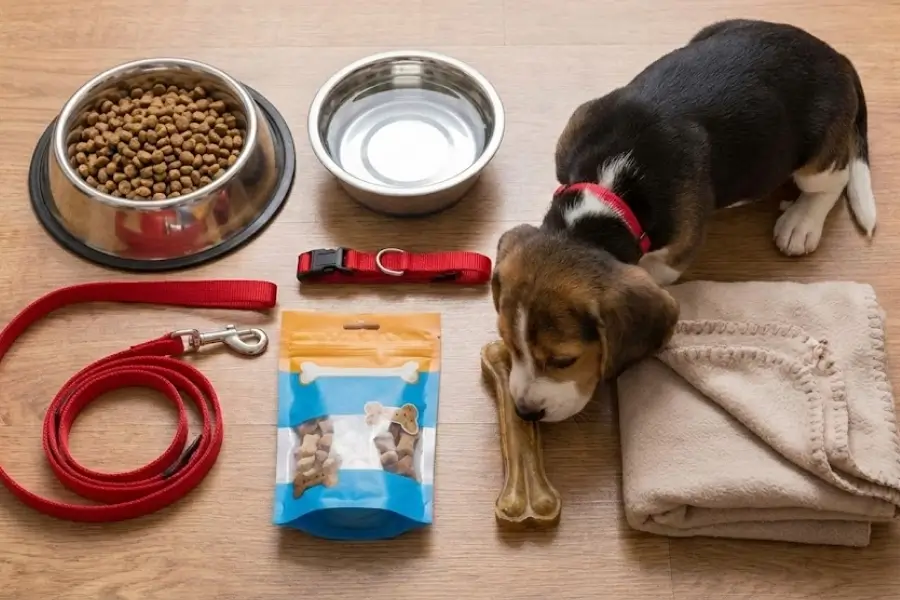
- Have the basics ready: bowls, food matching what they have been eating, a collar with an ID tag, a lead, a bed and several chew toys.
The first few days
- Keep it quiet. Resist inviting people to meet the dog for at least a week. They have just lost everything familiar and need the house to be boring.
- Start the routine on day one. Same feeding times, same toilet breaks, same walk times, same bedtime. Predictability is what makes a dog feel safe, more than affection does.
- Begin house training immediately. Outside after waking, after eating, after play and before bed, then every couple of hours between. Praise and treat the moment they finish, outside, not once you are back indoors.
Expect a settling period. Many dogs are quiet and well-behaved for the first week or two and only show their real personality once they relax. That is normal and not a bait and switch.
Food
- Keep them on their previous food for at least a week. A house move plus a diet change is a reliable way to produce diarrhoea.
- Change over gradually across seven to ten days, mixing a little more of the new food each day.
- Fixed meal times, usually twice a day for an adult, with portions based on the packaging and your vet’s advice rather than the bowl looking empty.
- Fresh water always available.
Health
- Book a vet visit in the first week or two. A full check, vaccinations, flea, tick and worm prevention, and microchip details.
- Update the microchip registration to your name and number. This is the single most commonly skipped step, and an out of date chip is the reason plenty of found dogs are not returned.
- Discuss neutering, including timing, which varies by breed and size more than people expect.
- Watch for lethargy, vomiting, diarrhoea, not eating, coughing or limping, and ring the vet rather than waiting it out in a dog you do not know yet.
Training and socialisation
- Start with sit, stay and a recall, using treats and praise. Short, frequent, cheerful sessions. Five minutes several times a day beats half an hour once.
- Lead training from the first walk, and make the walk enjoyable rather than a route march. Let them sniff.
- For a puppy, socialisation is urgent rather than optional. The window largely closes around twelve to fourteen weeks, so controlled exposure to sounds, surfaces, people and healthy vaccinated dogs matters now. A puppy class is worth the money.
- Agree house rules before the dog arrives and make sure everyone applies them. Whether the dog is allowed on the sofa is entirely your choice. Whether it is allowed on Tuesdays and not Wednesdays is not a rule the dog can learn.
Exercise and enrichment
- Daily exercise matched to breed, age and build. A puppy’s joints are still forming, so long runs come later.
- Mental work as well. Puzzle feeders, chews, training and sniffing. A dog that has used its brain settles far better than one that has only been walked.
If something is going wrong in week three, get help early. Most of the behaviour problems that end badly were small and fixable at the start.












0 Comments