
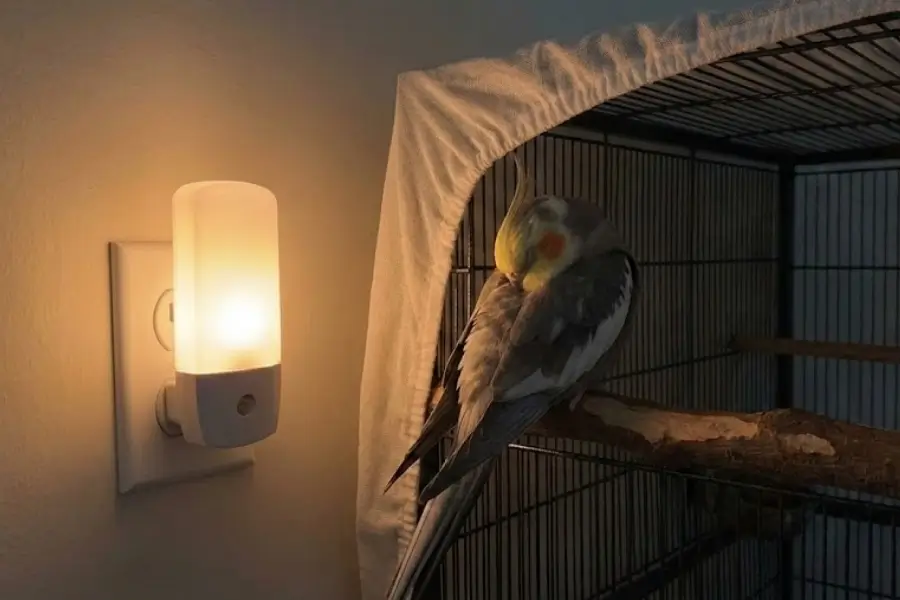
Being woken at two in the morning by a cockatiel throwing itself around a cage is one of the more alarming experiences in bird keeping, and it happens to a lot of cockatiel owners.
Night frights are a known thing in this species specifically. They are preventable to a large degree, and how you handle the first thirty seconds makes a real difference to whether the bird gets hurt.
Why cockatiels in particular
They are prey animals, and prey animals sleep with part of the brain still on duty. In the wild, a noise in the dark is information worth acting on immediately, and acting first and checking later is what kept the species alive.
Their night vision is poor, so a bird that wakes in a panic cannot see where the cage bars are. That is where the injuries come from. The usual triggers are ordinary household events:
- A sudden noise. A car outside, a dog, a boiler firing up.
- Moving shadows, particularly headlights sweeping across a wall.
- Another pet walking past the cage in the dark.
- A draught from a window or a vent.
- Insects or mice moving in or near the cage.
What it looks like
There is no mistaking it. Hard flapping against the bars, perches and toys, often with hissing or screaming and very fast breathing.
Turn the light on and you may find the bird on the cage floor, eyes wide and panting. Check for broken blood feathers, cuts and bruising, which are the common results of hitting things in the dark.
What to do in the moment
- Put a light on first. Nothing else helps until the bird can see that the room is the room and there is no predator in it.
- Go over slowly and talk quietly. A familiar voice does most of the settling.
- Look for obvious injury through the bars before you open anything. Bleeding, or a wing held wrong.
- Do not reach in and grab. A bird mid-panic is not recognising you and will bite. Wait for the thrashing to stop and the breathing to slow.
- Once they are calm, open up and offer a hand or a perch if they want it.
- When they are back on a perch you can turn the main light off, but leave a night light on.
Preventing the next one
- A night light is the single most effective thing you can do. Enough glow to see the cage by turns a panic into a startle.
- Cover the top and three sides rather than all four. A fully covered cage is completely dark inside, which is exactly the condition that makes a fright dangerous. Leaving the front open lets the night light work.
- Keep bedtime and uncovering at consistent times.
- Put the cage in a quiet room, and if the house is noisy, a fan or white noise machine smooths over the sudden sounds.
- Check for draughts, and for any sign of mice or insects near the cage.
The next morning
Look the bird over properly in daylight for broken feathers, cuts or any sign of pain, and call an avian vet if you find something. A broken blood feather can bleed more than you would expect from a bird that size.
Even with no injury they will be subdued for a while. Favourite treats and some quiet company nearby is the whole of the aftercare, and most birds are themselves again within a day.












0 Comments