
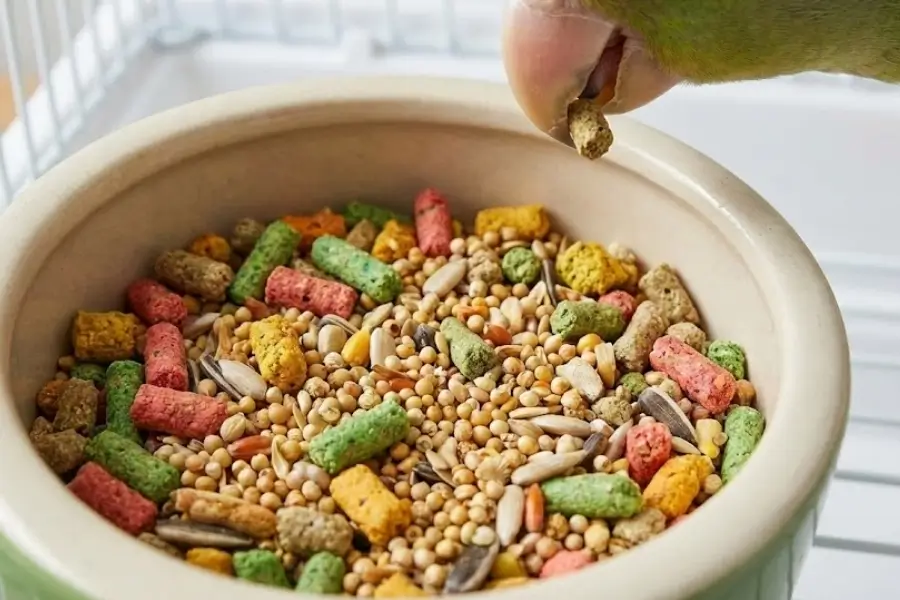
The bird with a bowl of seed is such a familiar picture that it is easy to miss that avian vets have been arguing against it for decades.
Seed is not poison and nobody is suggesting your bird is being mistreated. It is closer to a diet of nothing but takeaway: palatable, filling, and missing the things that keep a body working over years.
What is wrong with seed alone
Wild birds eat fruit, nuts, seeds, flowers, insects and greenery, and they fly for hours to find it. A caged bird does none of that flying but eats the richest part of that list.
- Too much fat. Sunflower and safflower in particular, and the result over time is obesity, fatty liver disease and fatty tumours.
- Missing nutrients. Seed is notably short on vitamin A and calcium, which show up as poor feather quality and a weaker immune system long before anything obvious goes wrong.
- Selective feeding. Given a mix, a bird eats its favourites first, and its favourites are the fattiest ones. The healthier seeds are still in the bowl when you top it up, which is why the bowl looks fine and the diet is not.
What pellets do differently
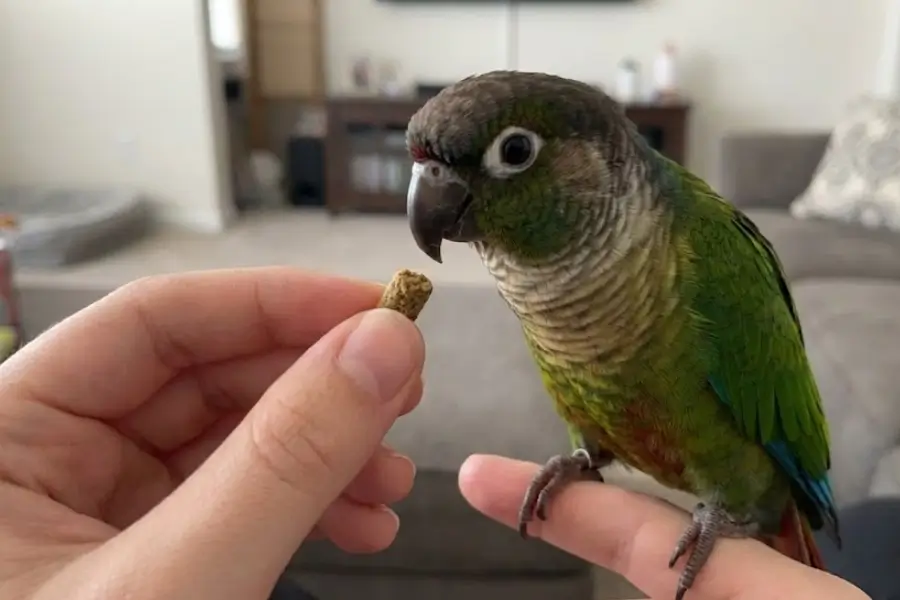
A formulated pellet is one uniform thing, so there is nothing to pick around. Every mouthful carries the same balance of grains, vitamins and minerals.
- The nutrition is balanced by design and matched to the species.
- There is far less waste, and you actually know what your bird ate.
- Feather condition, colour and energy usually improve visibly within a couple of months.
Making the switch, slowly
This is the part that needs care. Never starve a bird onto pellets. Birds have a fast metabolism and a small reserve, and a stubborn bird will genuinely stop eating rather than give in. Go gradually.
- Week one. Around ninety percent seed to ten percent pellet. The aim is only that the new thing becomes familiar.
- Week two. Move to about three quarters seed, one quarter pellet.
- Week three. Continue toward an even split, watching closely that pellets are actually being eaten rather than pushed aside.
- Weeks four to six. Reduce the seed until the diet is eighty to ninety percent pellet, with the rest fresh fruit and vegetables.
If your bird refuses
- Soften them with a little warm water or pure fruit juice, and take away anything left after a few hours so it cannot spoil.
- Mash them into a favourite food, banana or sweet potato being the usual winners.
- Try a coloured pellet. Some birds will investigate colour when they will not investigate shape.
- Offer a single pellet from your hand as though it were a treat, and make a fuss even if they only crumble it.
- Eat one yourself in front of them. It sounds ridiculous and it works more often than it has any right to, because birds want what you have.
Watch the bird, not the bowl
Weigh your bird regularly on a gram scale through the transition. A bowl can look emptied when the contents were simply thrown on the floor, and weight is the only measure that does not lie.
Keep an eye on droppings for any sharp change in colour or consistency, and talk to an avian vet before you start, both for a brand suited to your species and so somebody knows the diet is changing if anything does go wrong.
Some birds convert in a fortnight and some take months. Neither is a failure. Patience is the whole method here.












0 Comments