
The carrier comes out of the cupboard and the cat is gone. Under the bed, behind the sofa, and the vet appointment is in forty minutes.
This is not stubbornness, it is a correctly learned association. The carrier appears, and what follows is a car and a stranger touching them. Cats are good at pattern recognition, and this is a very easy pattern.
The fix is to break the association, and it works reliably given a few weeks.
Leave it out permanently
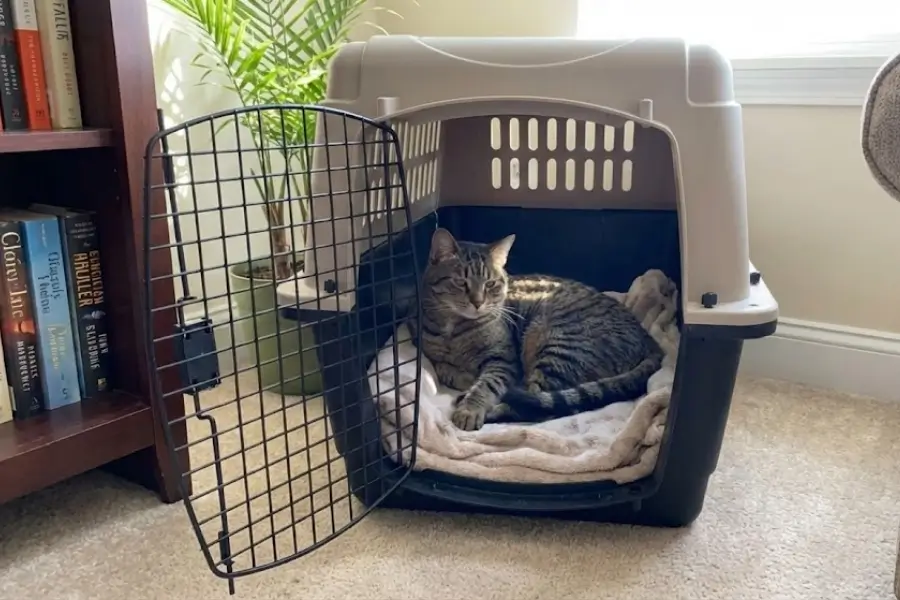
The single biggest change. A carrier kept in a cupboard is a signal. A carrier that has been in the living room for a month is furniture.
- Put it somewhere the cat actually spends time. Near a sunny window, or beside their usual sleeping spot.
- Take the door off or prop it wide open, always. It has to be a place they can leave, or it stays a trap.
- Then ignore it. The point is that nothing happens when they go in, for weeks.
Make it the nicest bed in the house
- Line it with soft bedding, ideally something that already smells of them or of you. A worn t-shirt works better than a new blanket.
- Calming pheromone spray inside, 15 to 30 minutes before you want them to use it, which is long enough for the alcohol carrier to evaporate.
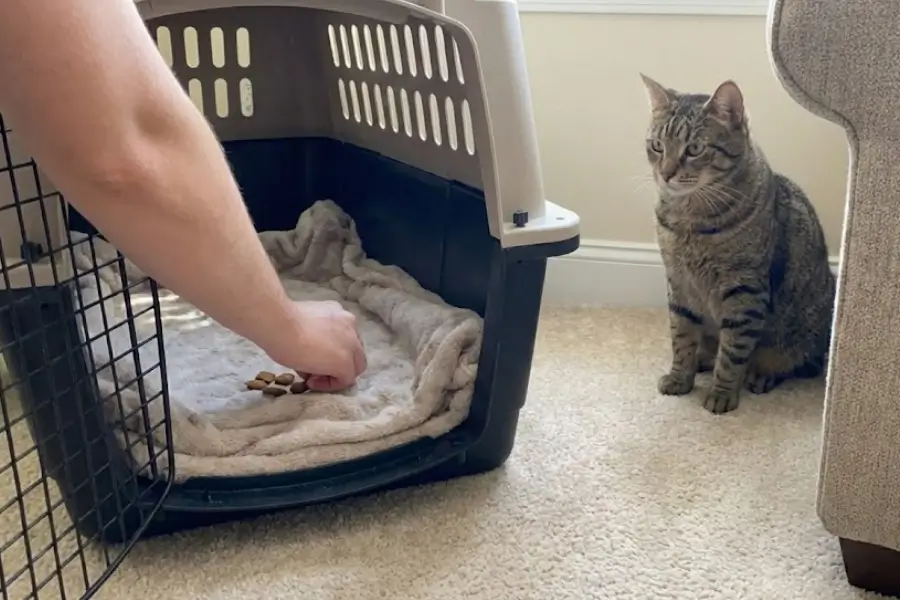
- Drop a treat or a favourite toy in occasionally when they are not watching. Finding something good in there by accident is more convincing than being shown it.
Never push them in
Forcing a cat into a carrier confirms everything they suspected, and it undoes weeks of work in about four seconds.
- Start with treats near the entrance, then just inside, then at the back, over several days.
- If your cat is food-motivated, feed meals in it. Bowl at the entrance to begin with, moving back a little each day until they are eating fully inside.
- Praise and treat any voluntary entry, even a paw and a look around.
Then practise the actual trip
Going in willingly is only half of it. The door closing and the movement are separate things and need their own conditioning.
- While they are eating in there, close the door for one second and open it again. Then three, then five, then ten.
- Lift it a few inches, put it down, open, reward. Then carry it a few steps across the room.
- Out to the car. Then into the car and back out. Then the engine on and off. Then once around the block and straight home.
Every one of those ends at home with something good. You are building a carrier that predicts nothing much, which is the goal.
On the day
Use a hard carrier that comes apart, with a top that lifts off. It means a frightened cat can be examined in the base rather than tipped out, and most vets strongly prefer it.
Cover it with a towel in the waiting room. Half of what makes a vet visit frightening is being at eye level with a row of dogs.
Do the practice sessions when there is no appointment coming. Work started the week before a vet visit will not be finished in time, and a rushed attempt is worse than none.












0 Comments