
Cats are generally called senior at around eleven to fourteen, and geriatric from fifteen. Those numbers move with breed and luck, but the pattern of what changes is fairly consistent.
Most of it is manageable, and a good deal of it is easy to miss, because cats are very good at not showing you. Here is what to watch for and what to change.
The physical changes
- Arthritis. The commonest problem in older cats and the most under-treated. Look for hesitation before a jump, difficulty with stairs, or stiffness after a nap rather than obvious limping.
- Dental disease. Extremely common, and painful. Tartar, gum inflammation and tooth resorption make eating uncomfortable, and weight loss follows.
- Weight moving in either direction. Gain makes arthritis worse. Unexplained loss points at hyperthyroidism, kidney disease or diabetes and is worth a vet visit on its own.
- Chronic kidney disease. Very common. Drinking and urinating more, losing weight, eating less, sometimes vomiting.
- Hyperthyroidism. The giveaway is a cat that is eating enthusiastically and still losing weight, often restless, drinking more, with a coat that looks unkempt.
- Diabetes. Thirst, urination and appetite all up, weight down.
- Sight and hearing fading. A cat that startles more easily, or seems lost in a dark room.
The behaviour changes, and what is behind them
- Sleeping more by day and becoming restless or vocal at night. Night-time calling in an old cat is often cognitive dysfunction rather than a demand for anything.
- A coat that looks dull, greasy or matted. That is usually not laziness. It is a cat who can no longer twist to reach.
- Missing the litter tray. A high-sided box is a painful climb for arthritic hips, and a cat with cognitive decline may not get there in time.
- Becoming either much more affectionate or noticeably withdrawn and short-tempered. Both are common, and irritability is usually pain.
- Feline cognitive dysfunction, which looks like disorientation, changed interaction, a reversed sleep cycle and soiling in the house.
What to change
See the vet twice a year
This is the single highest-value change. Six-monthly exams catch shifts in weight, blood pressure and organ function while they are still numbers on a page rather than symptoms. With kidney disease and hyperthyroidism in particular, early treatment buys real time and real comfort.
Adjust the food
Metabolism slows and protein is processed less efficiently, so many older cats do better on something more digestible with good quality protein to hold onto muscle. If there is a diagnosis, your vet may want a therapeutic diet. Change food slowly either way, because an old digestive system objects to surprises.
Make water easier to reach
Hydration matters more with declining kidneys, and an old cat is less willing to walk across the house for a drink. Put bowls in several rooms. A fountain suits cats who prefer moving water, and wet food gets moisture in without the cat having to decide to drink.
Change the furniture, not the cat
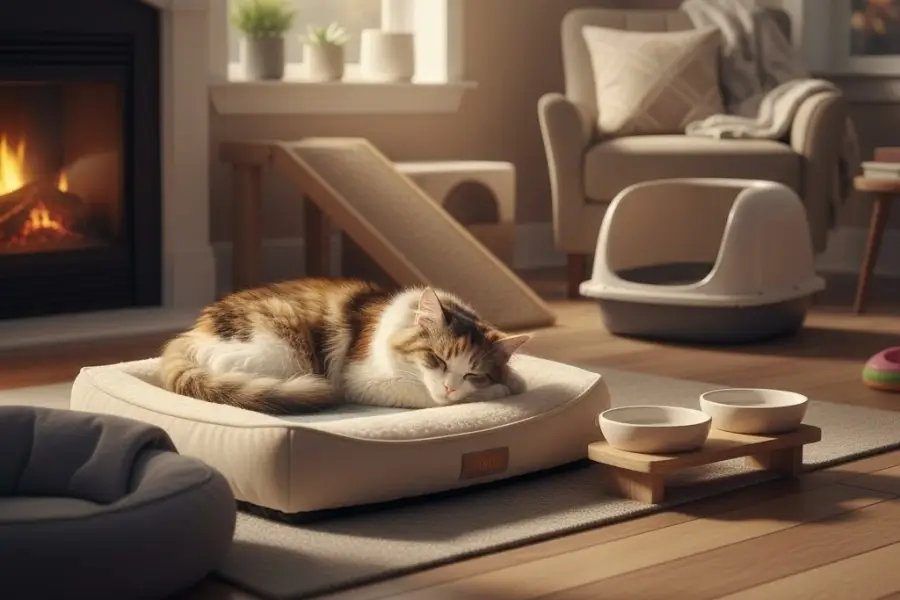
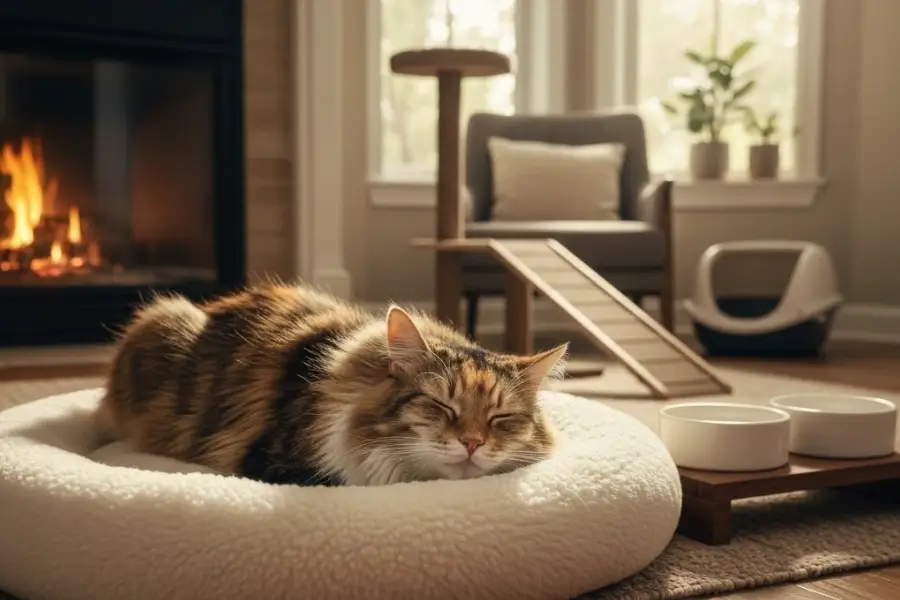
A ramp or steps up to the windowsill keeps a favourite spot in reach. Keep food, water and bed at floor level in the room they actually use. In a house with stairs, put a full set of everything on each floor so nothing requires a climb on a sore day.
Keep their mind busy
They have not stopped being curious, they have stopped being able to chase a wand toy for twenty minutes. Short gentle play, food puzzles, or a window and a bird feeder all count. Match it to what they can do now without leaving them sore.
Trust what you notice
You know this cat’s normal better than anyone. A cat who has quietly stopped getting on the bed, or who has started talking at three in the morning, is telling you something.
Small changes in appetite, litter habits or sociability are worth a phone call. In an animal this good at hiding illness, the subtle stuff is usually all the warning you get.












0 Comments