
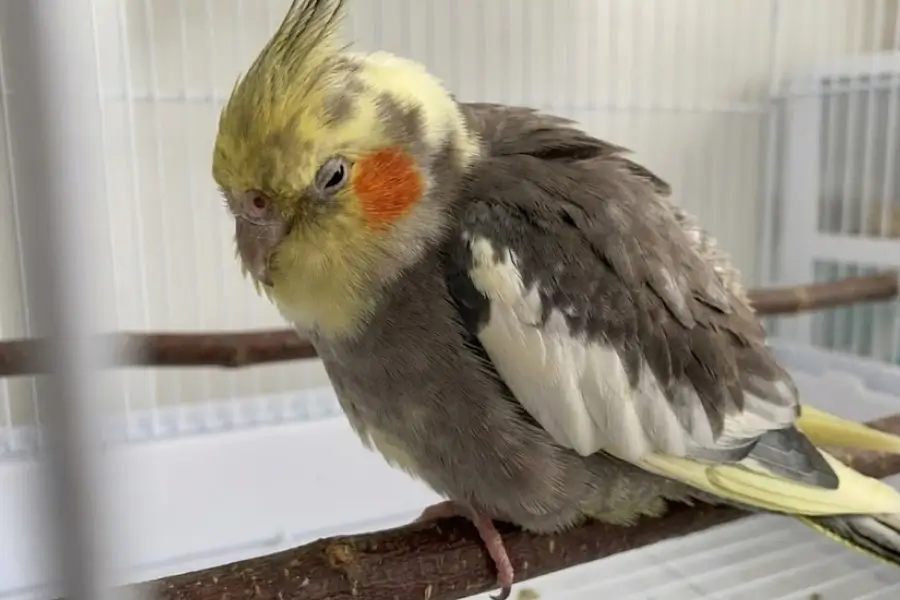
Birds conceal illness. A sick bird in the wild is the one a predator picks, so the instinct to look well overrides almost everything, and it does not switch off in a living room.
The practical consequence is that by the time a bird looks obviously ill, it has usually been unwell for a while. Spotting the subtle version is the whole skill.
What to look at
A healthy bird has smooth feathers held close, bright clear eyes and a clean vent.
- Sitting fluffed up for long stretches. They are trying to hold on to body heat, and it is one of the most reliable signs there is.
- Any discharge, redness or swelling around the eyes or the nares. Eyes should be clear and dry.
- Weight loss, felt as a more prominent keel bone down the middle of the chest. Feathers hide a great deal, which is why a gram scale tells you far more than looking does.
- Breathing trouble: an open beak at rest, wheezing, clicking, or the tail bobbing up and down with each breath.
Changes in behaviour
- Sleeping more, doing less, and sitting on the floor of the cage rather than the perch.
- Eating or drinking noticeably more or less.
- Going quiet, or making sounds that are not their usual ones.
You are looking for a change from what this particular bird normally does, which is why knowing your own bird’s routine matters more than any checklist.
Check the droppings daily
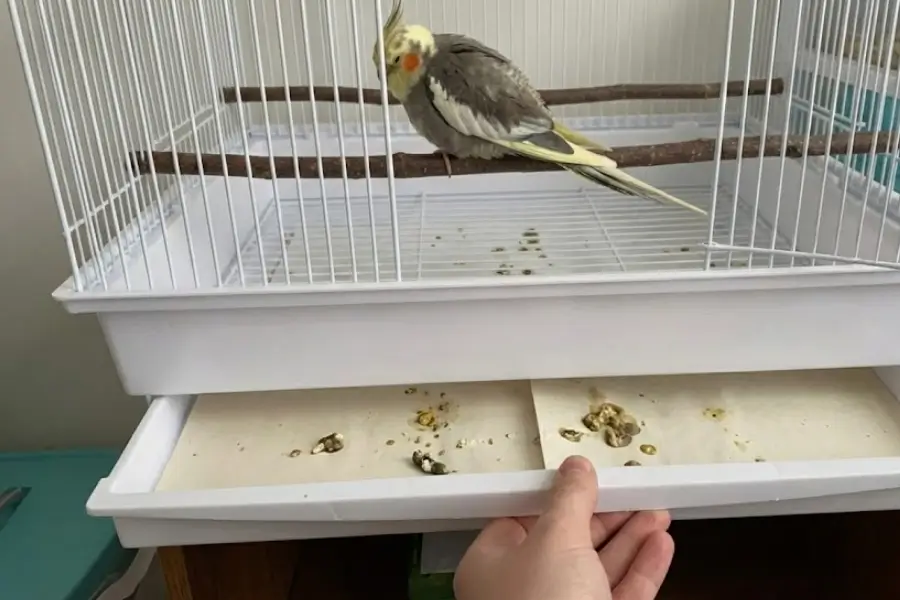
This is the most useful health check available and it takes seconds. A dropping has three parts: the faeces, which is solid and dark, the urates, which are the solid white portion, and clear liquid urine.
- Watch for colour changes, particularly yellow or green urates, which can indicate liver trouble.
- Watch for consistency, unusually watery or loose, and for a drop in quantity, which often means the bird has stopped eating.
- Whole undigested seeds in the droppings is a serious sign and needs a vet promptly.
Line the cage with plain paper rather than litter, so you can actually see what you are looking at.
What to do, in order
Treat any of the above as urgent. Birds decline fast, and the gap between the first sign and a crisis can be under a day.
- Ring your avian vet now. Describe exactly what you have seen. Do not wait until morning to see how they look.
- Keep the bird warm. A sick bird loses heat quickly. A heat pad on low under one side of the cage, or a bird-safe lamp, with the bird always able to move away from it.
- Cut the stress. Quiet, dimly lit, no draughts, away from other pets and household noise, with the cage covered on three sides.
- Put food and water within reach of wherever the bird is sitting. A weak bird will not climb to a bowl.
- For the journey, use a small secure carrier, and take the soiled cage paper with you. Droppings are genuinely useful diagnostic material and the vet will want to see them.
The thing to plan in advance
Find an avian vet before you need one, and know their out of hours arrangement. Many general practices do not see birds, and discovering that on a Sunday afternoon with a sick bird costs time you do not have.
With birds, wait and see is the mistake that keeps costing lives. Early is almost always better than certain.












0 Comments