
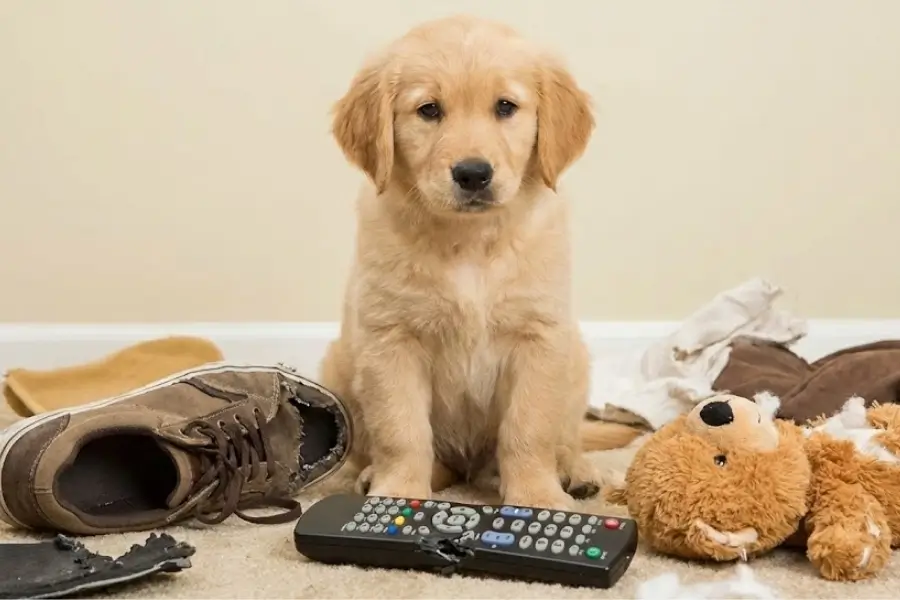
Puppies chew. It is not naughtiness and it is not a training failure, and treating it as either is why people end up frustrated with an animal doing exactly what it is supposed to do.
The job is not to stop the chewing. It is to decide what gets chewed.
Why they do it
Teething runs from around three to six months, and sore gums make a puppy want to gnaw on something.
- Pressure on the gums relieves the ache, particularly from something cold.
- They explore with their mouths the way a toddler explores with hands. Chewing is how they find out what something is.
- It releases endorphins, so it also relieves boredom and stress. A puppy left alone too long chews for a different reason than a teething one.
First, remove the opportunity
Management does more than training at this age, because a puppy cannot destroy what it cannot reach.
- Shoes, books, remote controls and anything you care about goes up. If you are not actively watching, the puppy is somewhere puppy-proofed.
- Cables are the dangerous one. Tuck them away or run them through chew-proof covers.
- For furniture legs and door frames, a bitter anti-chew spray works on many puppies. Test it somewhere hidden first, since some sprays mark wood.
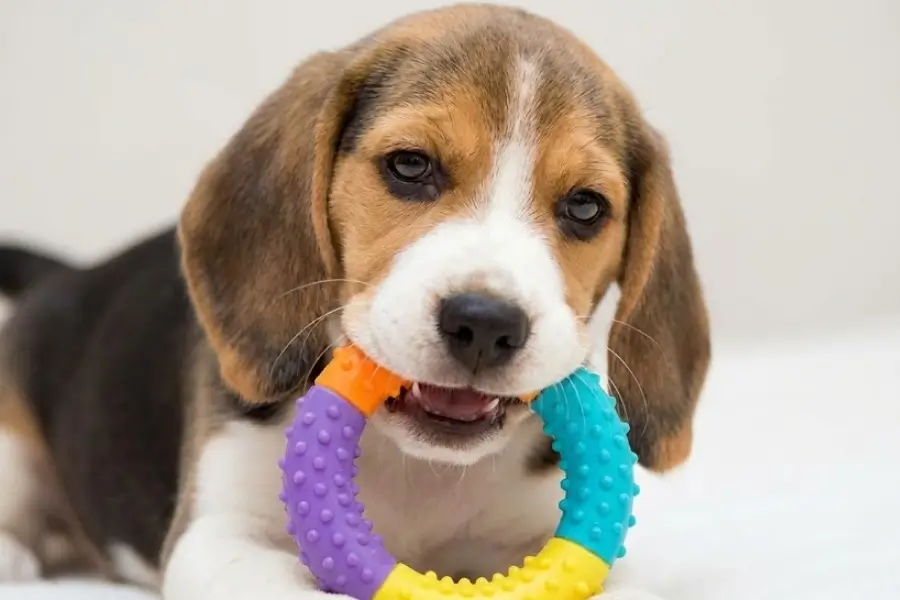
Then give them something better
Variety matters, because a teething puppy and a bored puppy want different things.
- Solid natural rubber toys, which give slightly under the tooth. Ones you can freeze are ideal, since cold is what actually helps sore gums.
- Rope and fabric toys for gentler chewing and games with you. Supervise rope, and retire it once strands come loose.
- Edible chews such as bully sticks, always supervised, and always taken away once small enough to swallow.
One thing to avoid: very hard chews. Nylon bones, antlers, hooves and real bones are hard enough to fracture teeth, and a puppy’s teeth are being replaced by adult ones you want to keep. The usual test is whether you can dent it with a thumbnail. If not, it is too hard.
Make the right toys the interesting ones
- Stuff them. Kibble mixed with something soft, frozen overnight, turns a toy into a job that lasts.
- Rotate them. Half out, half hidden, swapped every week or two, and each one comes back new.
- Play with them yourself. A toy you have used in a game is worth ten times a toy that was simply left on the floor.
Supervise and redirect
- Catch them on the wrong thing and interrupt with a light noise, not a shout. Then immediately put the right thing in their mouth.
- Praise and treat when they take the correct toy. The reward is for chewing the right thing, which is the lesson. Rewarding them merely for stopping teaches a puppy to start in order to stop.
- When you cannot watch, use a pen or a crate with only their own toys in it. This is not a punishment, it is what makes the rest of it work.
Expect it to run until the adult teeth are settled, and often a bit beyond. Some breeds chew well into adulthood, and for those the answer is the same: appropriate outlets, rotated, with enough exercise that chewing is not the most interesting thing available.












0 Comments