
Worry about the sofa is how most people end up asking their vet about declawing. It is worth knowing exactly what is being proposed, because the name describes something much smaller than the operation.
What the operation actually is
Declawing, or onychectomy, does not remove the nail. It amputates the last bone of every toe, because the claw grows from that bone and taking one without the other is not possible.
The human comparison is the honest one: removing each finger at the last knuckle. It is done under general anaesthetic, and recovery is painful and takes a while.
What follows it
Pain, sometimes permanent
The surgery hurts, and a proportion of cats have chronic pain long after healing. Infection, tissue death, lameness and back pain are all recognised complications, and a paw that has been rebuilt this way changes how the cat distributes weight, which stores up joint problems.
Behaviour
Claws are involved in scratching, climbing and stretching, and all three are normal needs rather than habits. Declawed cats are more likely to bite, because biting is what is left when the first line of defence is gone.
Litter tray problems are common too, and the reason is simple. Digging in grit with sore feet is unpleasant, and the cat finds somewhere softer.
No defence
A declawed cat that gets outside, or meets another animal indoors, has nothing. It cannot climb away either, which removes the escape route cats rely on most.
What works instead
Give them somewhere better to scratch
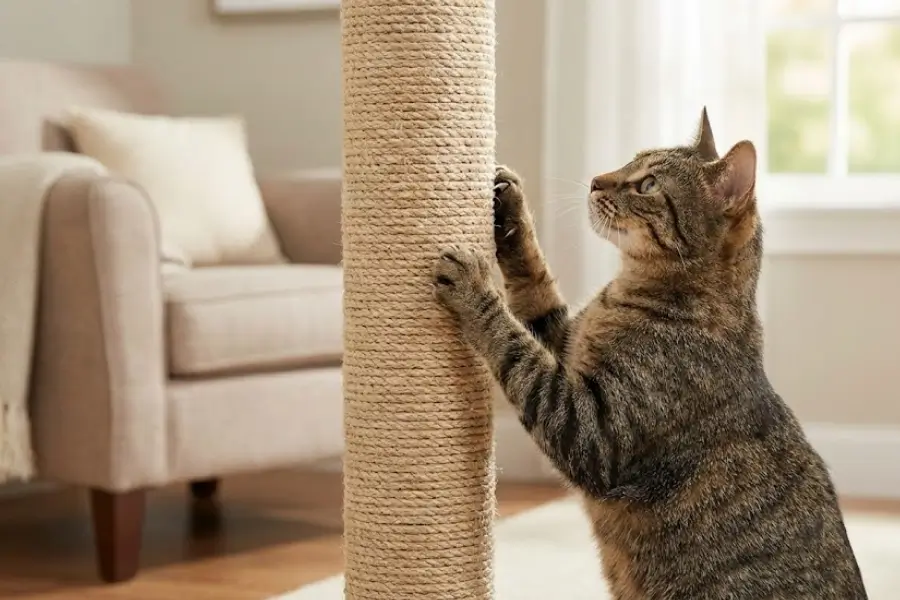
Scratching is not optional behaviour that can be trained out. It maintains the claws and marks territory, and the cat will do it somewhere.
- Offer more than one texture. Sisal rope, corrugated cardboard and carpet all appeal to different cats, and you cannot predict which.
- Put posts where the cat already scratches, not where they look tidy. Next to the sofa arm beats across the room.
- Make them tall enough for a full stretch, and heavy enough not to wobble. A post that moves gets abandoned.
Keep the claws blunt
Regular trimming takes the points off and removes most of the damage. Every couple of weeks, a few claws at a time if that is all the cat will allow.
Nail caps
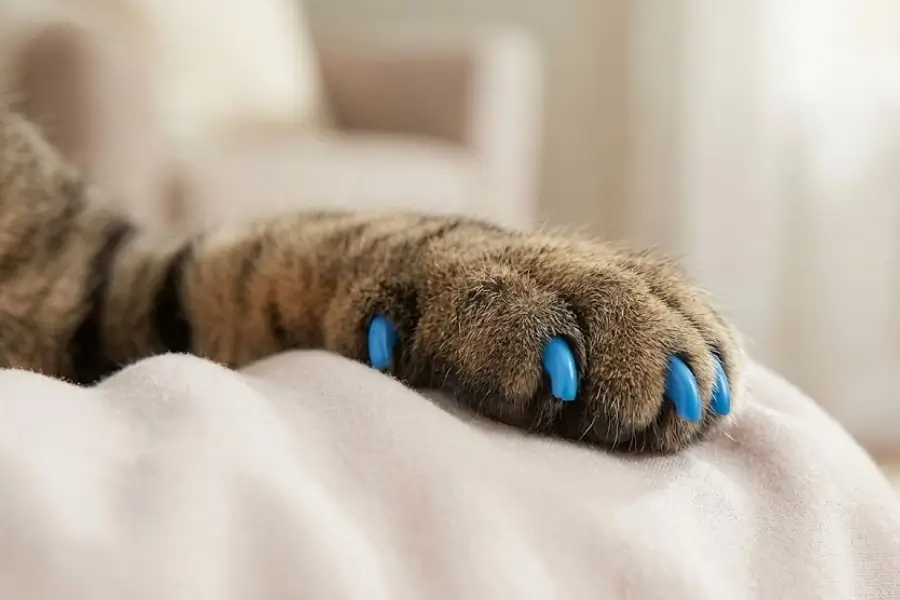
Soft covers glued over the claws, lasting several weeks before they drop off with the growing nail. They are painless, the claw still extends and retracts normally, and they buy time while a kitten learns where to scratch.
Redirect rather than tell off
- Reward the post. Treats and praise the moment they use it, every time, until the habit sets.
- Make the furniture dull. Double-sided tape or foil on the spot they favour, and a citrus scent nearby, which most cats dislike.
The short version
A scratching post in the right place, claws kept short, and a fortnight of consistency solves the furniture problem for most households.
Declawing solves it too, by permanently altering the cat’s feet. Once the two options are described accurately, most people find the choice straightforward.












0 Comments