
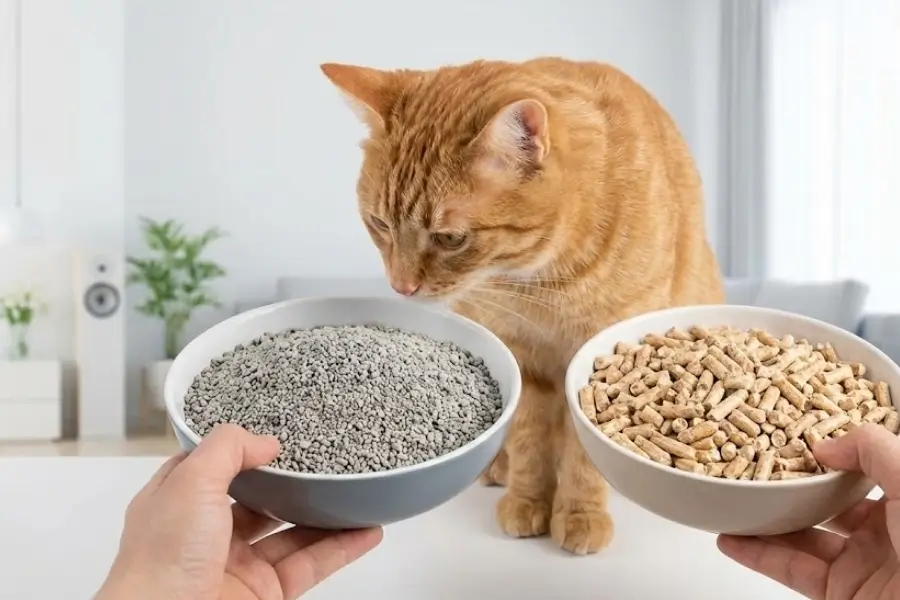
Litter is one of the few purchases where your cat gets a veto. Buy the wrong one and they will tell you, usually on the rug.
Here is what the types actually do, and which factors matter to you as against which matter to the cat.
The types
- Clay, the most common. Clumping clay forms solid lumps that lift out cleanly and controls odour well, at the cost of dust and weight. Non-clumping is cheaper and needs the whole tray changed far more often.
- Silica crystals. Absorbent beads that trap odour very effectively, light to carry and low in dust. More expensive, and some cats dislike the feel underfoot.
- Natural and plant-based, made from wood pellets, corn, wheat or walnut shell. Low dust, lighter, often biodegradable, and the texture or smell puts some cats off.
What to weigh up
- Odour control. Clumping clay and silica generally lead here. Note that scented litter is for your benefit and frequently against the cat’s, since their sense of smell is far more sensitive than ours and heavy fragrance is a common reason a tray gets refused.
- Clumping or not. Clumping is easier day to day, because you remove the mess rather than living with it until the next full change.
- Tracking. Larger pellets and crystals scatter less than fine clay. A mat outside the tray does more than changing litter type.
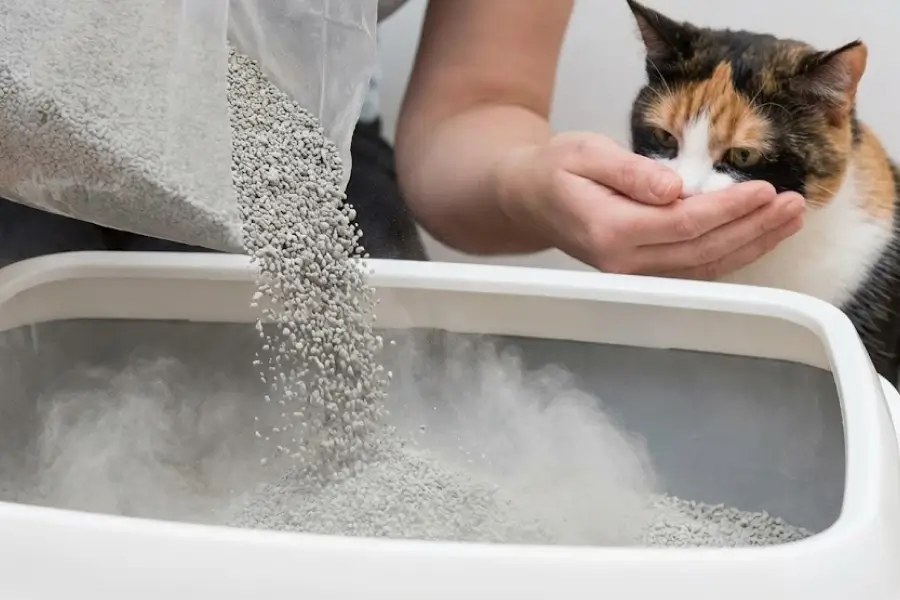
- Dust. It irritates your airways and your cat’s, and matters more if anyone in the house is asthmatic. Look for low-dust products, and pour slowly.
- Your cat’s opinion, which overrides all of the above. Most cats prefer a fine, soft, unscented substrate, which is closest to the sand a cat would choose naturally.
Finding out what your cat wants
You do not have to guess. Put two or three trays side by side with different litters in them and watch which gets used. Cats answer this question clearly within a few days, and it settles the argument better than any review.
Changing over
- Mix the new litter in with the old over a week or two rather than swapping outright.
- Watch for hesitation at the tray, scratching at the floor outside it, or going elsewhere. All three mean the cat does not like what you have bought.
One last thing. A cat that suddenly stops using a tray it was happy with is not usually making a point about litter. Urinary problems present exactly like this, and in a male cat a blockage is an emergency. If the litter has not changed and the behaviour has, ring the vet before you buy a different bag.












0 Comments