
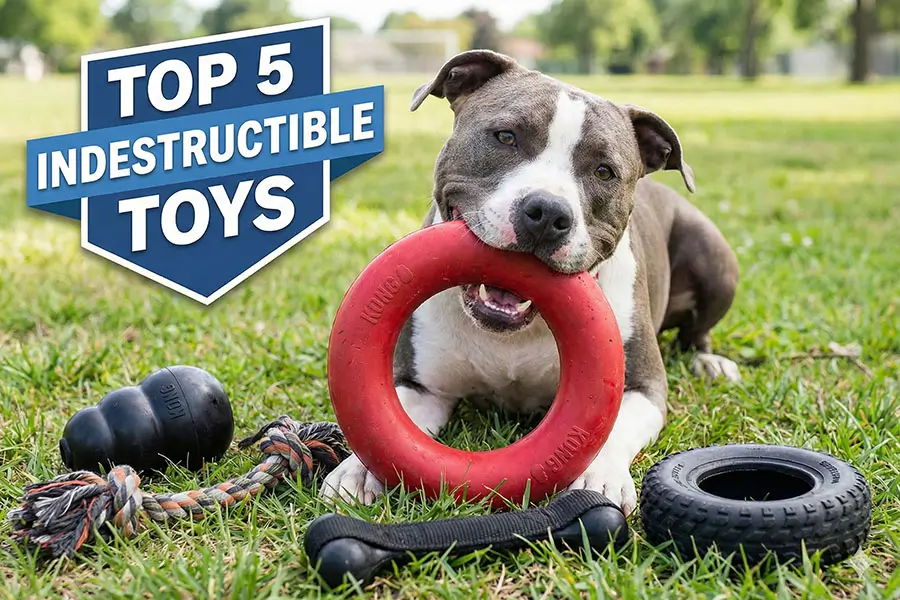
You buy a toy that says indestructible on the label and there is fluff across the hall inside ten minutes. For a Rottweiler, a bull breed or a determined shepherd, this is not a spending problem so much as a safety one, because the pieces have to go somewhere.
The first thing worth saying is that no toy is indestructible. Given enough time every one of them fails. What you are choosing between is how they fail, and that turns out to matter more than how long they last.
The rule that protects their teeth
The most common serious injury from chew toys is not swallowing something. It is a slab fracture of a carnassial tooth, and it comes from toys that are too hard.
Two rough tests used widely by vets. If you cannot make a dent in it with a thumbnail, it is too hard. If you would not want it swung against your kneecap, it is too hard. That rules out a lot of what is sold specifically to power chewers.
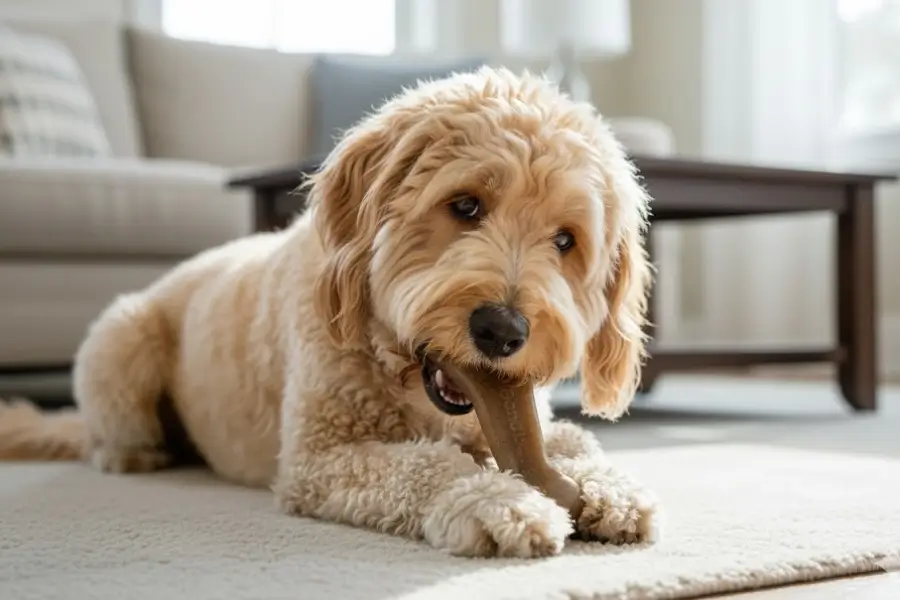
- Nylon bones, antlers, hooves and real weight-bearing bones are the usual culprits. They last well precisely because they are harder than enamel.
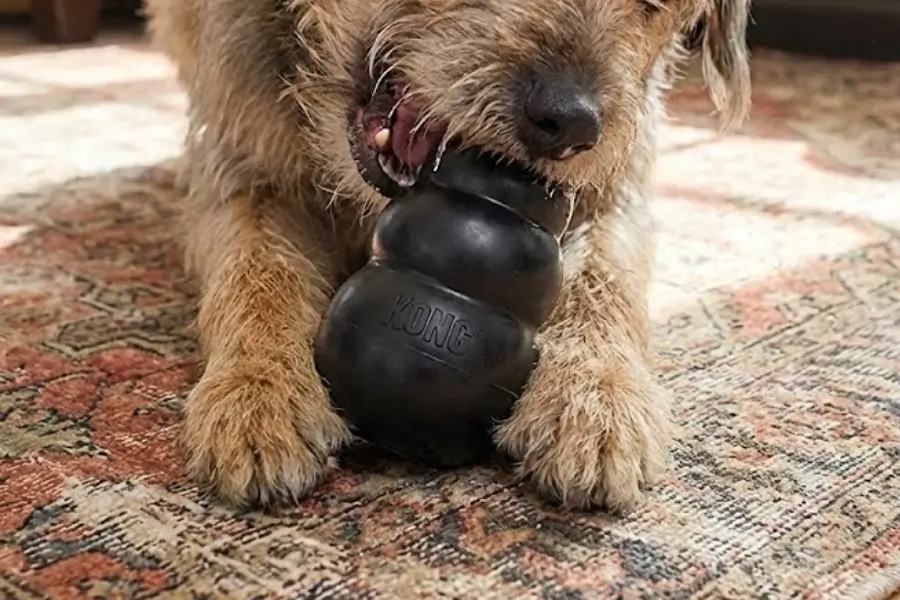
- Solid natural rubber is the standard answer. It gives under pressure, which is why it survives and why it does not break teeth.
- Ice cubes and rocks belong in the same category as antlers, in case anyone in the house has been offering them.
How it fails matters more than whether it fails
A toy that wears down gradually is manageable. A toy that comes apart in chunks is an obstruction risk, and obstruction surgery is expensive and dangerous.
- Thick solid rubber wears slowly and comes off in shavings rather than pieces.
- Thin hollow rubber splits, and a split edge is torn off whole.
- Squeakers are the most commonly swallowed component in the whole category. A determined dog will find and extract one within minutes.
- Rope toys deserve their own warning. Swallowed strands cause a linear foreign body, where the gut bunches along the thread. It is one of the worse presentations a vet sees, and rope toys are sold as harmless.
Size it up
Buy larger than seems necessary. A toy that can fit fully into the mouth can be swallowed or lodged at the back of the throat, and dogs regularly manage both.
Judge the size against a fully open jaw rather than a resting one, and go up a size when a dog is between two.
Make it last by changing what the dog does
A dog shearing at a toy destroys it fast. A dog licking and working at a toy can be occupied for an hour and the toy survives.
Stuffable rubber toys are the practical answer. Fill one with something the dog has to work out, freeze it, and you have turned a chewing session into a puzzle. It occupies the brain, which is usually what the dog actually needed, and it puts far less force through the rubber.
Rotating toys helps too. A toy that has been away for a fortnight is interesting again, and interest spread across four toys is four times less wear on each.
What to actually do
- Supervise chewing, particularly with anything new. Most accidents happen the first time a dog gets through the outer layer.
- Check toys over regularly and retire anything with a piece missing or a split forming. A toy is finished the moment it starts producing fragments, not when it is fully destroyed.
- Expect to replace things. Budgeting for a new toy every few weeks is cheaper than one set of dental X-rays, let alone surgery.
If your dog has already broken a tooth on a chew, get it looked at even though they are eating normally. Dogs conceal dental pain almost completely, and a fractured carnassial with exposed pulp is both painful and a route to infection.
















0 Comments