
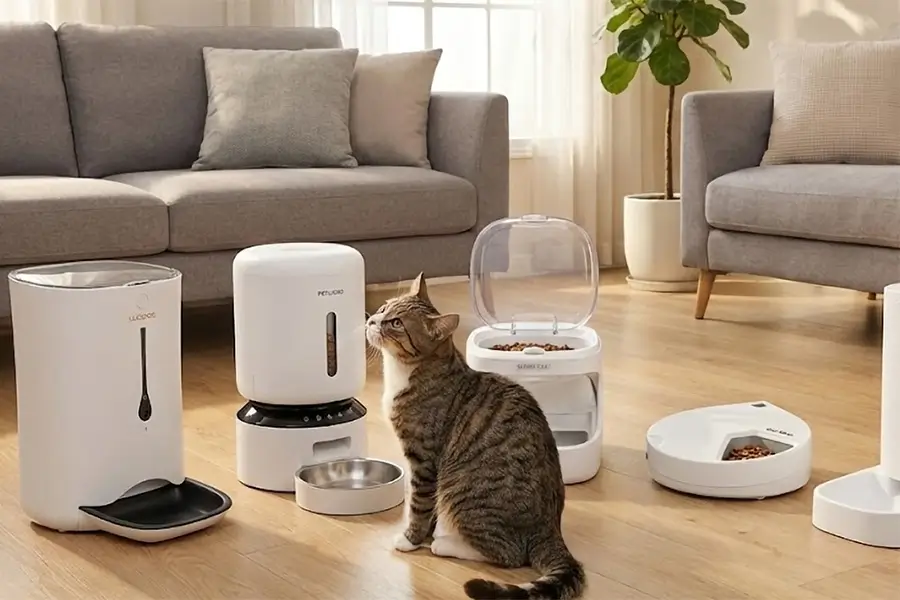
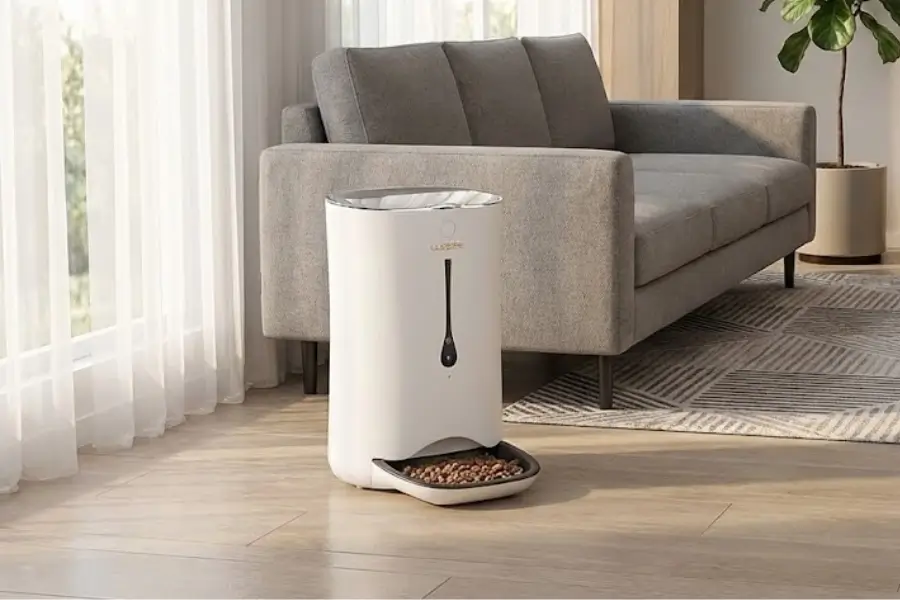
Gravity feeders solved the wrong problem. A tower that tips out kibble whenever the bowl empties gives a cat unlimited food and no schedule, which suits almost no cat.
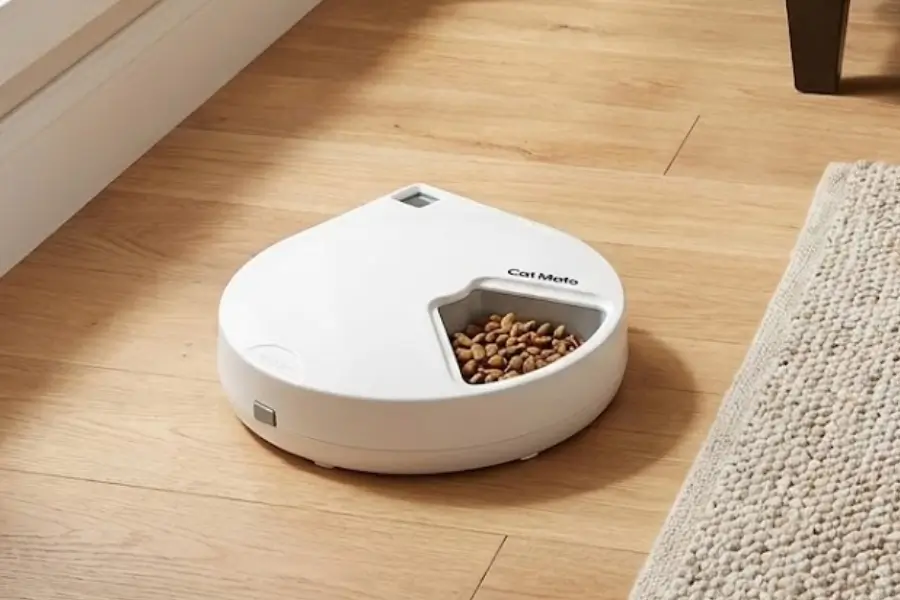
Automatic feeders have got considerably better, and they now cover portion control, multi-cat households and a weekend away. They also fail in specific ways that are worth knowing about before you rely on one.
Decide what you are solving first
- Weight control. You want accurate small portions spread through the day, and a feeder your cat cannot open.
- The four in the morning wake-up. You want a feeder that can deliver an early breakfast without you, which usually solves the problem within a week.
- Being away. You want reliability above every other feature, and a person checking in regardless.
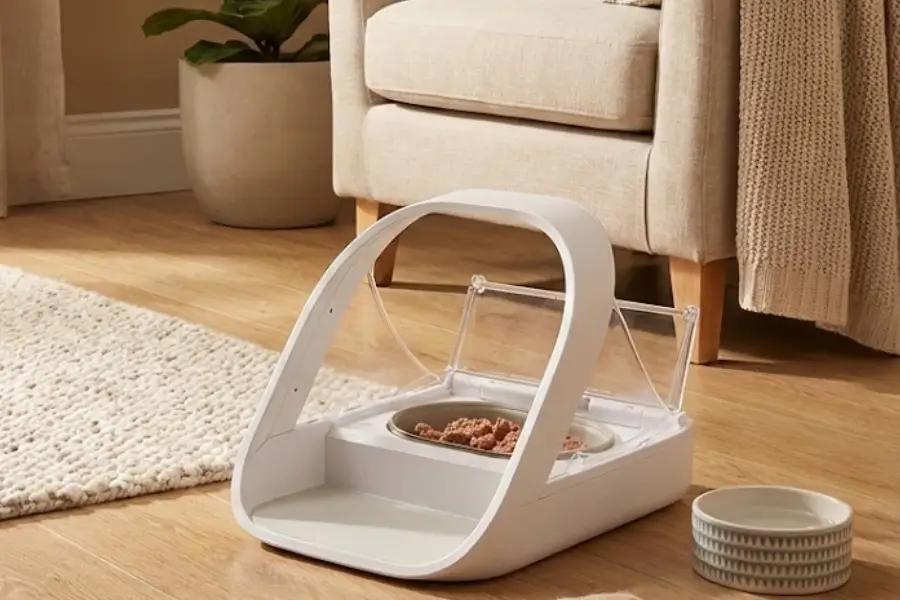
- Multi-cat, where one cat eats the other’s food. You want a microchip or tag-activated feeder, which is a different and more expensive category.
Dry or wet
Most automatic feeders take dry food only. Wet food needs active cooling, which makes those units larger, more expensive and limited to two or three meals.
If your cat is wet-fed, a dry feeder is not a compromise you can make, so start in the refrigerated category rather than being disappointed by a cheaper one.
What actually separates them
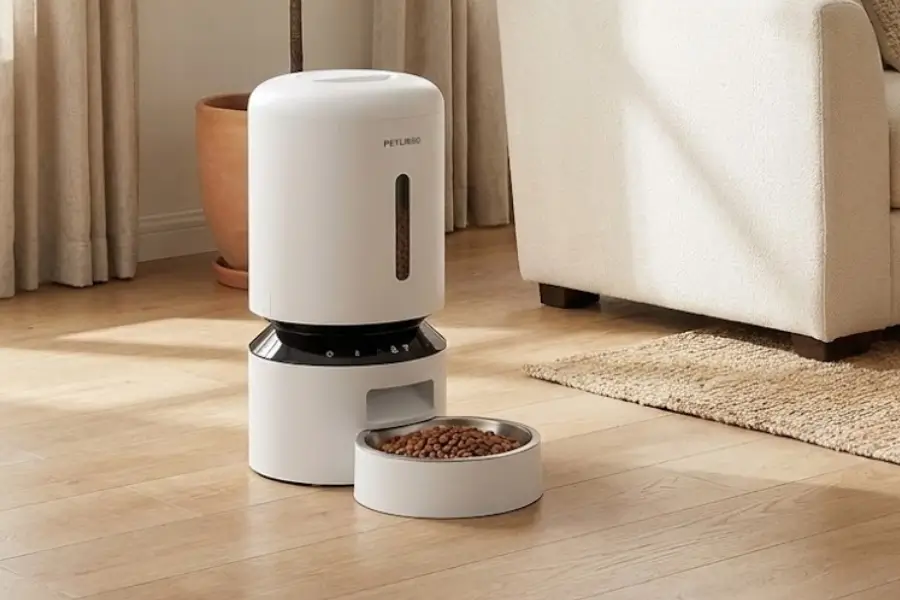
- Portion accuracy. Cheap augers vary a lot meal to meal, which matters if you are managing weight. Look for a unit that dispenses by rotation count with a consistent chamber.
- Kibble shape tolerance. Jamming is the most common failure, and large, irregular or triangular kibble jams more. If your cat’s food is an odd shape, check the feeder’s stated size range.
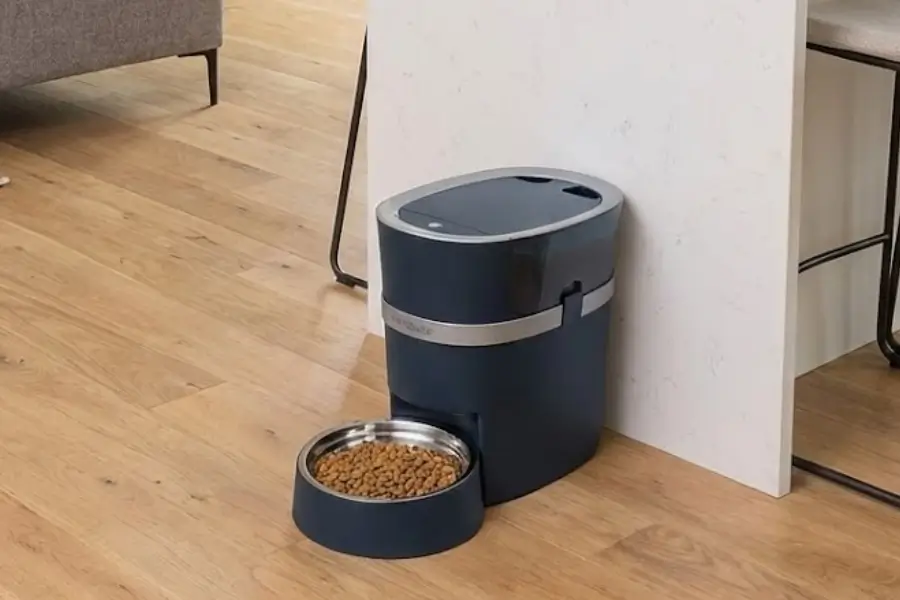
- Power. Mains with battery backup is what you want. Battery-only units fail silently when the batteries go, which you discover afterwards.
- Onboard controls as well as an app. A feeder that only works through Wi-Fi stops feeding your cat when the router reboots. The schedule should live in the machine, with the app as a convenience.
- A feeding log. This is the feature you will care about most from a hotel, because it tells you whether the meal was actually delivered.
- Cleaning. Removable bowl and hopper, ideally dishwasher safe. Kibble leaves oil behind and it goes rancid, which puts cats off and is easy to miss.
- Cat resistance. A determined cat will lift a lid, tip a unit or work an auger with a paw. Weight at the base and a locking hopper are what stop that.
- Noise. The motor runs right before food arrives, which most cats learn to love. If it lives in a bedroom you may feel differently.
The failure to plan for
The realistic risk is not the feeder breaking. It is a jam, or a cat tipping the unit, or a power cut, and none of those announce themselves.
- Run any new feeder for at least two weeks while you are home before you depend on it.
- Leave a separate bowl of dry food as a backup when you travel, unless your cat cannot be trusted with free food.
- Have somebody physically look at the cat every day you are away. A feeding log tells you the machine turned. It does not tell you the cat ate, or that the cat is well.
The short version
Buy for the specific problem, insist on mains power with battery backup and onboard scheduling, and check the kibble fits the mechanism.
Then treat it as a convenience rather than a carer. A feeder buys you a lie-in and a smoother day. It does not make a cat safe to leave alone for a weekend, and the cats that go wrong are the ones nobody looked at.
















0 Comments