
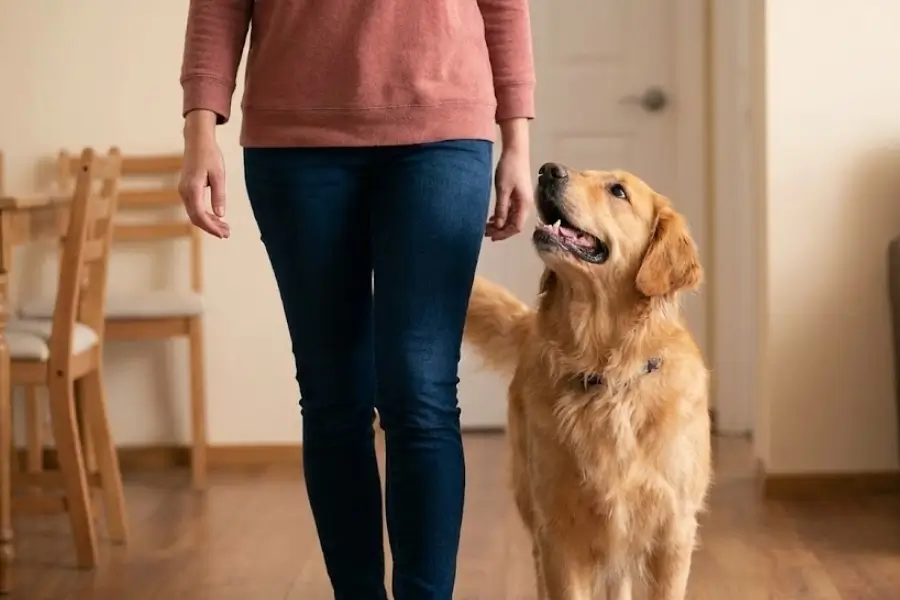
Some dogs cannot let you cross a room alone. Into the kitchen, into the bathroom, lying across your feet the moment you sit down.
It is usually affection and habit. Occasionally it is a problem, and the difference is worth being able to spot.
Why dogs stay close
You will often see this explained as dogs needing a pack leader. That model came from studying captive wolves and has been abandoned by the researcher who popularised it, and it does not describe dogs living with people.
What is true is simpler. Dogs are intensely social animals who have spent thousands of years being selected for wanting to be near humans. Staying close to you is not about rank. It is about company and safety, in an animal built to seek both.
And because it works
The rest is straightforward learning. You are where everything good comes from.
- Food, walks, treats and play all originate with you, so your movement is worth tracking. Following you to the kitchen has paid off before.
- Every glance, word or absent-minded stroke rewards it. Even tripping over them and saying something is attention, and attention maintains the behaviour.

When it is anxiety instead
Ordinary following is relaxed. The dog ambles after you and settles when you settle. Anxiety looks different.
- It is constant and urgent rather than casual, and they cannot rest unless touching you.
- They become visibly distressed as you get ready to leave, at the keys or the shoes rather than at the door.
- There is chewing, barking or soiling while you are out.
That combination is separation anxiety, which is a genuine panic response rather than clinginess and needs a proper plan. It is also worth a vet visit if the shadowing is new in an older dog, since pain, failing sight and canine cognitive dysfunction all produce sudden clinginess.
Building a bit of independence
None of this is about discouraging affection. It is about the dog being able to relax when you are not within reach.
- Teach a settle. Send them to a specific bed or mat, and reward them there while you move around. You are paying for lying down somewhere that is not on your feet, which is the behaviour you actually want.
- Stop rewarding the shadowing. No eye contact or conversation when they follow. Wait until they have settled elsewhere, then go over and make a fuss.
- Practise short absences. Leave the room for five seconds and come back before they are worried, then ten, then a minute. The lesson is that you always come back, and it only lands if you return while they are still calm.
The honest answer
For most dogs this is not a problem to be solved. It is what living with a social animal looks like, and it is one of the reasons people keep dogs.
Worry about it only when the dog cannot settle without you, or when your leaving the house is clearly frightening. That is a different thing, and it responds well to being treated as one.












0 Comments